

Your Feelings Deserve a Seat at the Table, Not the Driver's Seat
This post contains affiliate links. I may earn a small commission at no cost to you — I only recommend products I'd genuinely suggest to a client.

There is a particular kind of advice that sounds helpful until you're the person who is actually feeling something: "Don't make decisions when you're emotional."
The intention behind it makes sense. Nobody wants to send a text while furious and regret it twenty minutes later. Nobody wants to quit their job in the middle of a terrible afternoon, only to wake up the next morning and wonder what they were thinking. Strong emotions can narrow our focus, and giving ourselves time before making a major decision can keep us from reacting to something we haven't fully thought through.
But when we take that advice too far, another problem can develop. We start treating our feelings as evidence that something is wrong with us.
We're angry, so we need to calm down. We're anxious, so we need to stop overthinking. We're hurt, so we need to get over it. We're disappointed, so we tell ourselves we shouldn't be this affected.
After enough of that, it can become difficult to tell the difference between emotional regulation and emotional suppression. We may become very good at getting ourselves back to "fine" without ever asking why we weren't fine in the first place.
Your feelings deserve more consideration than that, but they also don't need to make every decision for you. Both things can be true.
A Feeling Can Be Real Without Being the Whole Story
Think about the last time you felt angry with someone you care about. The anger itself was real. You felt it in your body: the irritation, the tension, and the urge to pull away or say something you had been holding back. None of that becomes imaginary simply because you later understood the situation differently.
At the same time, the feeling may not have contained the entire story.
Perhaps the person actually crossed a line. Perhaps you were already exhausted, stressed, and carrying something unrelated before the conversation happened. Maybe the comment touched an older wound and brought up a reaction that was much bigger than the moment itself.
The emotion still mattered. What it was trying to tell you requires a little more investigation.
This is where emotional regulation can get misunderstood. Regulating an emotion doesn't mean convincing yourself that you shouldn't feel it. It means creating enough space to understand what is happening before deciding what to do about it.
Anger can tell you that something matters. Fear can tell you that you don't feel secure. Sadness can point toward a loss that hasn't been fully acknowledged. Even jealousy can contain useful information about an insecurity, desire, or fear that deserves your attention.
The emotion gives you somewhere to look, but it doesn't necessarily tell you what you'll find once you get there.
Your Brain Will Try to Make the Feeling Make Sense
Part of what makes intense emotions so convincing is that our minds naturally want an explanation for them.
If you're anxious, your brain starts looking for something to be anxious about. If you're hurt, it can become very easy to collect evidence that confirms why you should stay hurt. Once anger enters the picture, every irritating thing that person has done recently can suddenly feel relevant.
This doesn't mean your thoughts are irrational. It means emotions influence what we notice.
A feeling can change the way you interpret the same situation. A text that would have seemed neutral yesterday might feel dismissive today. A delayed response can suddenly feel like rejection. A small disagreement can start to feel like proof that the entire relationship is falling apart.
If you've ever thought, I knew I wasn't overreacting, only to feel completely different about the situation a few hours later, you already understand this. The first interpretation felt true because the emotion was strong. Later, with more distance, you had access to more information.
Neither version of you was necessarily lying. You simply weren't looking at the situation from the same emotional state.
That is why a pause can be so useful. It isn't about waiting until you stop caring. It gives you a chance to see whether the meaning you assigned to the situation still makes sense once the intensity has come down.
There Is a Difference Between Listening to Yourself and Obeying Yourself
This distinction becomes especially important for people who have spent years either ignoring their feelings or being overwhelmed by them.
If you've learned to suppress your emotions, you may need permission to take them seriously. You might have spent a long time telling yourself that you're being too sensitive, too needy, too emotional, or too affected by things that other people seem to handle easily.
In that case, hearing "your feelings aren't facts" can land badly. You already have a hard enough time trusting what you feel.
On the other side, some people have learned to treat every strong feeling as a reason to act immediately. The emotion arrives, and the decision follows before there has been much room for reflection. A relationship feels wrong, so it must end. A job feels unbearable, so it has to go. Someone disappoints you, so you cut them off.
Neither pattern creates much room for self-trust.
Self-trust requires being able to hear yourself without automatically handing yourself the final answer. You can listen to your anger and still decide that you need more information. You can take your fear seriously while recognizing that fear is not always a prediction. You can acknowledge that something hurt you without deciding that the person who hurt you intended to cause harm.
That is a more mature relationship with your emotions. Your feelings get included in the conversation, but they aren't the only person speaking.
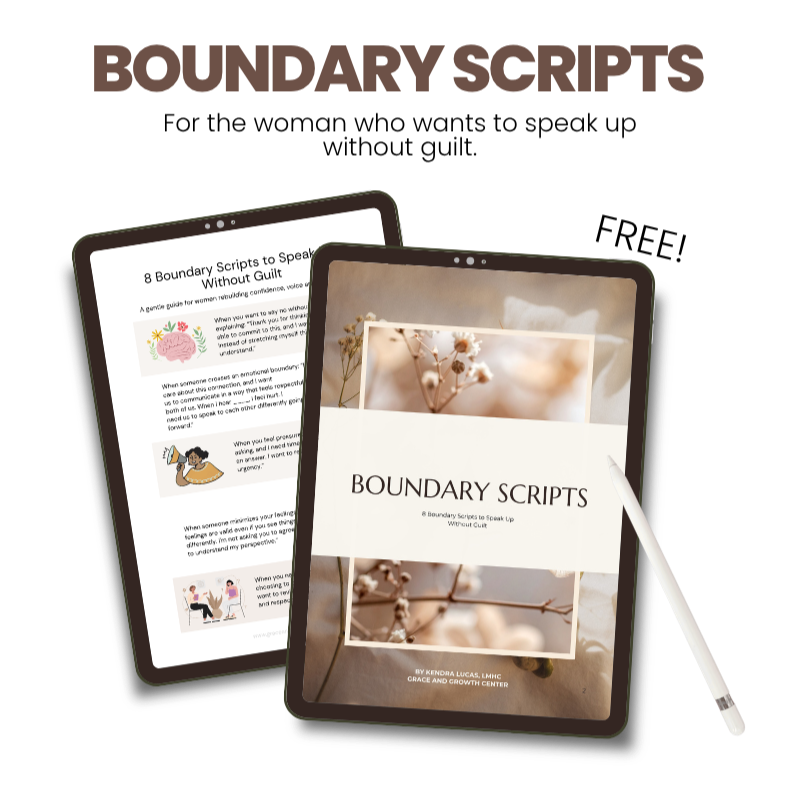
Know What You Need to Say — Just Not How to Say It?
This free guide gives you the exact words for the boundary conversations you keep avoiding, so you can protect your peace without over-explaining yourself.
What Happens in the Space Between Feeling and Acting
There is usually a small window between having an emotional reaction and doing something about it. It may be easy to miss because intense feelings create a strong sense of urgency. You want to respond now. You want clarity now. You want the other person to understand what they did now. Most of all, you want the discomfort to end.
That urgency can make action feel like relief, but relief and resolution aren't always the same thing.
You might send the text because you need to get the words out of your head. You might make the decision because not deciding feels unbearable. You might withdraw because being around the person is making you uncomfortable. Then the emotional intensity passes, and you're left with the actual decision.
Sometimes you'll still feel good about what you did. That's important information too. Regulation isn't about talking yourself out of every emotional response. There are moments when your first reaction points toward something that genuinely needs your attention.
Other times, you may realize you were responding to something different than you thought. Maybe you were exhausted or already carrying resentment from several unrelated things. Maybe the situation reminded you of something that happened years ago. Maybe you needed reassurance more than you needed to end the relationship.
That is what the pause gives you the opportunity to discover. You don't have to trust the first story your mind tells you simply because it arrived with a strong feeling attached to it.
Nobody said you had to Become Unbothered
We've made "being unbothered" sound like the ultimate sign of emotional maturity, but it isn't.
You can be deeply affected by something and still handle yourself well. You can cry and still communicate clearly. You can be angry and decide to wait before responding. You can feel rejected without deciding that you're unworthy. You can be anxious about a change and still move forward with it because you know the change is right for you.
Being emotionally regulated doesn't mean becoming so composed that nothing reaches you. In fact, if you have to disconnect from yourself in order to stay calm, that deserves some attention too.
There is a difference between being grounded and being detached. Grounding allows the feeling to exist while you stay connected to your judgment. Detachment can look like not caring because caring feels too difficult to manage.
That distinction can be hard to recognize, especially if you've spent a long time being praised for being "the calm one" or "the one who handles everything." You may have learned how to keep functioning through difficult experiences without ever learning how to process what those experiences brought up.
You can be highly functional and still emotionally overwhelmed. You can also be emotional and still make thoughtful decisions. Neither tells the whole story.
Give Yourself Enough Time to Find Out What the Feeling Is About
The next time something hits you harder than expected, you don't have to immediately decide whether your reaction is justified. Start by getting curious.
What happened? What did you make it mean? What part of the situation feels most painful? Is the feeling connected to what is happening right now, or does it remind you of something you've experienced before?
You may not get a clear answer immediately, and that's okay. The point isn't to interrogate yourself until the emotion disappears. It's to create enough distance that you can hear more than one piece of information at a time.
Your feelings are one piece. Your values matter too, as does the context and what you know about the person, the situation, and yourself. It also matters what outcome you're actually trying to create.
A decision made with all of that information available is very different from a decision made because you needed the feeling to stop.
That doesn't mean you will always make the perfect choice. There isn't a version of emotional regulation that gives you perfect certainty. It gives you a better chance of making a decision you can understand and stand behind once the emotion has had time to settle.
Know What You Need to Say — Just Not How to Say It?
This free guide gives you the exact words for the boundary conversations you keep avoiding, so you can protect your peace without over-explaining yourself.
You Don't Have to Choose Between Feeling and Thinking
Maybe you've spent years believing you have to choose. Either you're the emotional one who feels everything deeply, or you're the rational one who keeps it together. Either you trust your gut completely, or you ignore your feelings because they aren't reliable enough.
I don't think you need to live at either extreme.
Your feelings can tell you something important while your judgment helps you decide what to do with that information. That's the balance.
You don't have to become less sensitive to become more regulated. You don't have to stop caring in order to make good decisions. You don't have to distrust yourself every time your emotions get intense.
You can feel the anger and then ask what it is telling you. You can notice the fear and look at what is actually happening. You can acknowledge the hurt and decide what response is going to take care of you in the long run.
That process takes practice because most of us weren't taught how to do it. We were taught to calm down, move on, toughen up, think positively, or stop being so emotional. There is a big difference between managing an emotion and understanding one.
If emotional regulation has always felt like trying to get yourself to stop feeling, it may be worth approaching it differently. Your feelings don't need to disappear before you can move forward. They deserve a seat at the table, but they don't get to make the whole decision by themselves.
If You're Learning How to Understand Your Emotions
Learning to regulate your emotions can be difficult to do in isolation, especially if you've spent years feeling like your reactions are either too much or not trustworthy enough.
Therapy can give you a place to slow those patterns down and understand what is happening underneath them. At Grace and Growth Center, we work with women who are trying to understand themselves more clearly, navigate relationships with greater intention, and respond to life without losing themselves in the process.
If that's the kind of support you're looking for, learn more about therapy at Grace and Growth Center.
You don't have to become someone who feels less. You can learn how to make room for what you feel while still choosing what you want to do with it.
KEEP READING
More For The High-Achieving Woman.


Ready To Stop Reading About It And Actually Change It?
Book a free 15-minute consultation — no pressure, no commitment.

Feelings are information, not instructions. Here's how to take your emotions seriously without letting them run every decision.