

Why Being Single on Valentine's Day Hurts More Than You Think It Should
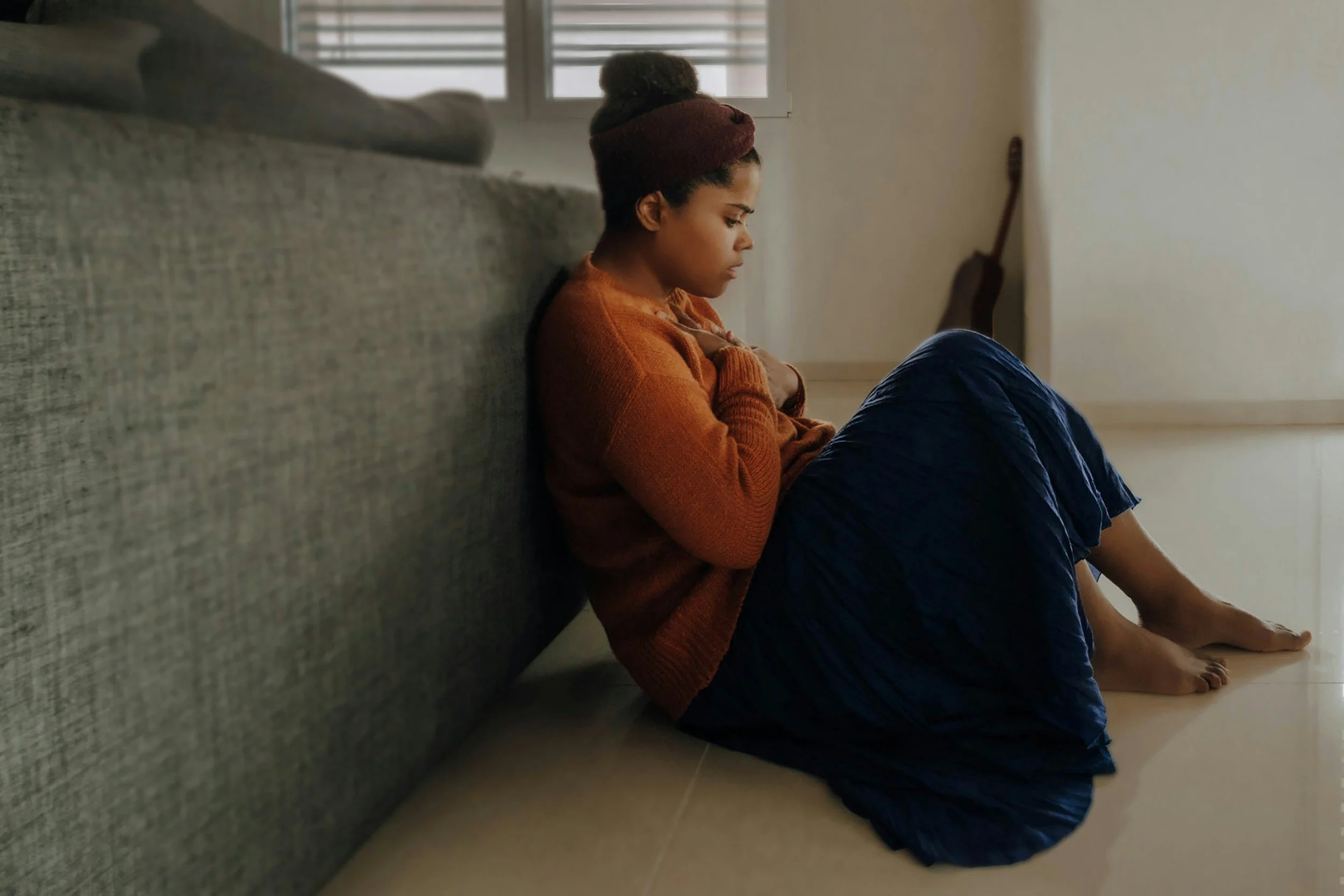
You've been doing okay. Actually okay — not the performative kind. You've built a life that works. You've done the healing work, or at least started it. You know your worth, most days. You've stopped waiting for your life to begin.
And then February arrives.
Slowly at first, a few ads, a display at the drugstore, a conversation at work about dinner reservations. And then all at once, your entire feed becomes a referendum on your relationship status. Flowers. Proposals. Couples who apparently cannot stop publicly adoring each other. Captions about "my person" and "the one I choose every day."
And something in you — the part that was doing just fine — quietly cracks.
If that's happened to you, I want to say something before we go any further: you are not dramatic. You are not behind. You are not failing at healing because a holiday got to you. You're a person with real desires for connection, living inside a culture that just spent two weeks reminding you of the one thing you don't currently have.
Of course it stings. Let's talk about why.
It's not really about the holiday
Valentine's Day isn't just about romance. It's about a specific set of feelings that romance is supposed to deliver, and that most of us are quietly, constantly longing for.
Being chosen. Being seen. Being someone's priority. Having someone who shows up for you intentionally, not just by default.
When you're single — or when you're healing from a relationship that didn't give you those things — Valentine's Day doesn't just make you aware of their absence. It turns a spotlight on it. It asks, loudly and publicly: do you have this? And when the answer is no, or not yet, or not in the way you wanted, the feelings that surface aren't really about chocolates and dinner reservations.
They're about something much older and deeper: the fear that maybe you won't be chosen. That love, in the form you actually want it, isn't coming for you. That everyone else seems to have figured out something you haven't.
Those are not small fears. They deserve more than a "stop scrolling and practice gratitude" response.
Why social media makes it so much worse
Your nervous system is not a rational actor. It doesn't pause on a Valentine's post and think: this is a curated highlight reel, statistically this couple probably argued about dishes last week. It just registers: everyone has something I don't.
And it does that over and over again, for hours, if you let it — because the content doesn't stop on February 14th. It keeps coming: the morning-after recaps, the flowers-at-the-office photos, the "he really outdid himself" stories. Each one is a small, repeated signal to your nervous system that you are on the outside of something.
The comparison it breeds isn't petty. It's actually a very human response to a social environment that's temporarily organized itself entirely around one specific type of relationship. You're not scrolling because you're weak. You're scrolling because hope and longing make it hard to look away. But knowing that doesn't mean you have to keep doing it.
Logging off for a few days isn't avoidance. It's just not volunteering for something that's actively hurting you.
The complicated grief of missing someone who wasn't right for you
Here's something that doesn't get talked about enough: Valentine's Day is particularly hard when you're healing from a relationship that you know wasn't good for you, because the day has a way of editing your memories.
Loneliness doesn't call up the full picture. It calls up the good parts. The inside jokes. The comfort of having someone to call. The feeling, however imperfect, of being someone's person. And when those memories surface against a backdrop of everyone else celebrating love, it's easy to start questioning yourself.
Did I give up too soon? Was I too difficult? Would it have gotten better?
This is worth naming clearly: missing someone is not evidence that you made the wrong choice. Grief doesn't cancel out the reasons a relationship didn't work. You can mourn the connection and still know it wasn't sustainable. You can wish things had been different without that meaning you should have stayed.
The loneliness you feel today is real. It's just not the whole truth about what that relationship was.
If you're in the middle of heartbreak right now, don't wait until you "feel better" to start taking care of yourself. Small steps can make a huge difference when emotions feel overwhelming.
THE BREAKUP EMERGENCY KIT
Practical tools for the moments when you're tempted to text your ex, spiraling over the breakup, or struggling to get through the day.
✔ Grounding exercises
✔ Journal prompts
✔ Emotional coping tools
✔ Self-care recovery plan
When he "didn't believe in" Valentine's Day
There's a particular kind of Valentine's Day pain that belongs to women who were with someone who dismissed the whole thing.
It's just a commercial holiday. I show you I love you all year. I don't need a random Tuesday to prove something.
Maybe you agreed, out loud. Maybe part of you even believed it. But underneath, there was still a quiet want — to feel celebrated, to have someone make a gesture just because it would mean something to you, to be prioritized in a way that was visible and intentional. Not because you needed a grand romantic performance, but because effort is a language. And you wanted to be spoken to.
If you're single now, that unmet want can resurface on Valentine's Day in a complicated way. You might find yourself wondering if wanting that made you too needy, or if the next person will be different, or whether you were asking for something unreasonable.
You weren't. Wanting to feel valued and celebrated isn't shallow. It's a legitimate emotional need. The problem was never that you wanted it. The problem was being with someone who made you feel like you shouldn't.
What the fear underneath the loneliness is really about
If you sit with Valentine's Day loneliness long enough — really sit with it, instead of distracting or minimizing — it usually reveals something underneath the surface feeling.
For a lot of women, that something is a fear. Not just I am alone right now, but something more existential: What if I'm always alone? What if I'm not the kind of person who gets chosen? What if healthy love is available to everyone except me?
These fears aren't irrational. They're usually built from something real — relationships that were inconsistent or painful, early experiences that taught you love comes with conditions, a long enough stretch of not having what you wanted that the wanting started to feel like evidence against you.
Valentine's Day doesn't create those fears. It just creates the conditions where they're hard to ignore.
And that, honestly, can be useful. Not comfortable, but useful. Because the fears you can see are the ones you can actually start to work with.
You are not behind
I want to say this directly, because the cultural script of Valentine's Day is relentless about implying otherwise.
Relationships are not milestones you unlock by doing the right things in the right order. They're not rewards for being healed enough, or attractive enough, or emotionally available enough. They require timing, alignment, two people who are both capable of showing up, and a degree of chance that has nothing to do with your worthiness.
Being single is not evidence that something is wrong with you. Sometimes it's evidence that you stopped accepting less than you deserved, which takes real courage and comes with real grief. Sometimes it's just where you are right now, for reasons that have nothing to do with your value as a person.
You are not running out of time. You are not being passed over because of some flaw. You are a whole person, right now, in the life you're currently living, and that doesn't start becoming true once someone chooses you.
How to actually get through today
Not a numbered list of tips — just a few honest things.
Feel what you feel without making it mean something catastrophic. Sadness today is not a sign that you'll be sad forever. Longing today is not evidence that love isn't coming. Let the feeling move through without attaching a verdict to it.
Be selective about what you consume. You know which accounts are going to make this harder. You're allowed to mute them. You're allowed to put the phone down. The highlight reel will still be there when you're in a better place to watch it without it affecting you.
Find one moment of genuine connection today. Not performance, not distraction — one real conversation with someone who actually knows you. Let yourself be a little honest about how you're feeling. Being known, even in small doses, is its own kind of antidote to loneliness.
Remind yourself of the real reasons. If you left something — or chose not to go back to something — that took discernment. Missing someone on Valentine's Day doesn't erase what you knew when you were inside it. Hold both things at once: the grief is real and you made the right call.
If Valentine's Day consistently hits this hard
If every February brings the same wave — the same anxiety, the same spiral, the same crash in self-worth — it's worth paying attention to that pattern rather than just managing through it year after year.
Recurring emotional intensity around connection and love is often connected to attachment — to the early experiences that shaped your beliefs about whether you're worthy of love, whether it's safe to need people, and whether good relationships are actually available to you. Therapy can help you trace those patterns back to their roots and start to shift them, so that February stops feeling like a recurring wound and starts feeling like just another month.
You deserve a love that feels safe, that's consistent, that doesn't make you question your own needs. And you deserve to feel whole in the meantime — not as a consolation prize, but as a foundation.
If this season has been heavy and you're ready to talk to someone, I'd love to connect. You can find out more about working together here.
And if you're not there yet, the newsletter is a good place to stay in touch — weekly reflections on relationships, healing, and building emotional security from the inside out. Subscribe below.
You might also like: What to Do the Day After Valentine's Day When You Feel Lonely • Why Do I Feel Lonely Even When I'm Not Alone?
KEEP READING
More for the high-achieving woman.

Ready to stop reading about it and actually change it?
Book a free 15-minute consultation — no pressure, no commitment.

What we call confidence can sometimes be protection. When you’ve spent years deciding what parts of yourself are safe to reveal, confidence becomes less about being seen and more about trusting yourself enough to be known.