
You Can’t Stop Thinking About It…Again
(And why that doesn’t mean anything is wrong with you)

If you’re here, chances are your mind feels like it won’t give you a break.
You replay conversations.
You rethink what you said.
You analyze what you should have done differently.
You lie in bed at night going over the same moment like you’ll eventually find the missing answer.
I want you to hear this first, before anything else:
This isn’t because you’re broken.
This is what a nervous system does when it’s overwhelmed and looking for safety.
Your Mind Isn’t a Problem. It’s a Protector
When clients tell me, “I can’t stop thinking about it,” I often explain it like this:
Your mind is like a broken record.
Every mistake.
Every awkward moment.
Every “why did I say that?”
Every what if.
It feels obsessive, exhausting, and frustrating—especially when you’re telling yourself to “just let it go,” and it won’t.
But rumination isn’t clarity.
It’s protection.
Your brain is scanning for danger. It’s trying to prevent future pain by reviewing past moments. The issue is that your brain doesn’t know the difference between helpful reflection and self-punishment—especially when you’re already stressed, tired, or emotionally flooded.

Therapist Truth: I Struggle With This Too
I want to normalize this in a very real way.
I’m a therapist, and I still struggle with overthinking and replaying thoughts.
I’ll catch myself revisiting something I said. A tone I used. A moment where I wonder if I showed up “the right way.” I know the tools. I teach the tools. And still, my brain sometimes wants to loop.
That doesn’t mean I’m failing at healing.
And it doesn’t mean you are either.
It means we’re human beings with nervous systems that learned how to survive.
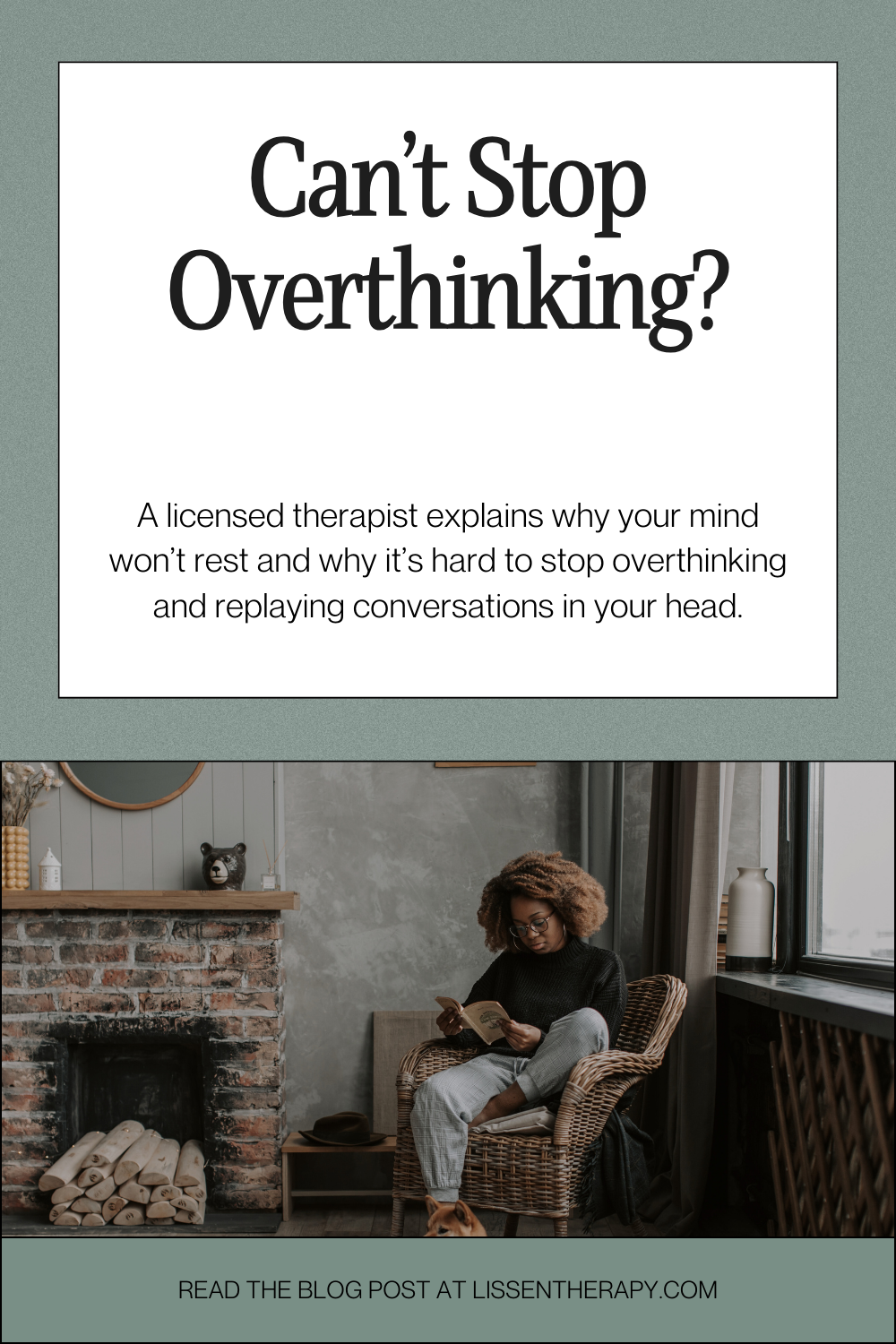
What I Often Tell Clients About Overthinking
Many of my therapy clients struggling with anxiety and overthinking come into therapy feeling exhausted by their own thoughts.
Here are some things I regularly share in session:
“Your thoughts aren’t the problem. Your nervous system is asking for safety.”
“If thinking harder actually worked, you’d already feel better.”
“Overthinking usually shows up when rest, reassurance, or regulation is missing.”
“We don’t stop thoughts by arguing with them. We soften them by calming the body.”
This is why simply telling yourself “stop thinking about it” rarely helps. Your body doesn’t feel safe yet. And a nervous system that doesn’t feel safe will keep scanning.
Why It Gets Worse at Night
Many people notice the replay is loudest when they’re alone or trying to sleep.
That’s not random.
During the day, you’re distracted. You’re productive. You’re in go-mode. At night, when things slow down, your nervous system finally has space to speak, and it often does so through thoughts.
So if your mind races at night, it’s not because you’re regressing.
It’s because your body finally has permission to feel.
What Actually Helps (Instead of Forcing It Away)
Here’s what I gently encourage clients to try, not as a fix, but as support:
Name it: “This is rumination, not truth.”
Shift to the body: slow breathing, grounding, placing your feet on the floor
Offer compassion: “Of course my mind is doing this. I’ve been overwhelmed.”
Set a boundary with the thought: “I can think about this tomorrow. Right now, I rest.”
Healing isn’t about shutting your mind off.
It’s about teaching your nervous system that it’s safe enough to let go.
A Final Reminder
If you can’t stop thinking about it again, please don’t turn that into another reason to judge yourself.
You’re not behind.
You’re not failing.
You’re not too much.
You’re tired.
You’re human.
And your system is doing the best it knows how.
With care, support, and safety, your mind will learn how to rest again.
And until then, you don’t have to face it alone
TLDR
If you can’t stop replaying a moment, conversation, or mistake, it’s not because you’re weak or dramatic—it’s because your nervous system is activated. Overthinking is often a survival response, not a personal flaw. Healing comes from safety, regulation, and compassion, not forcing your thoughts to stop.
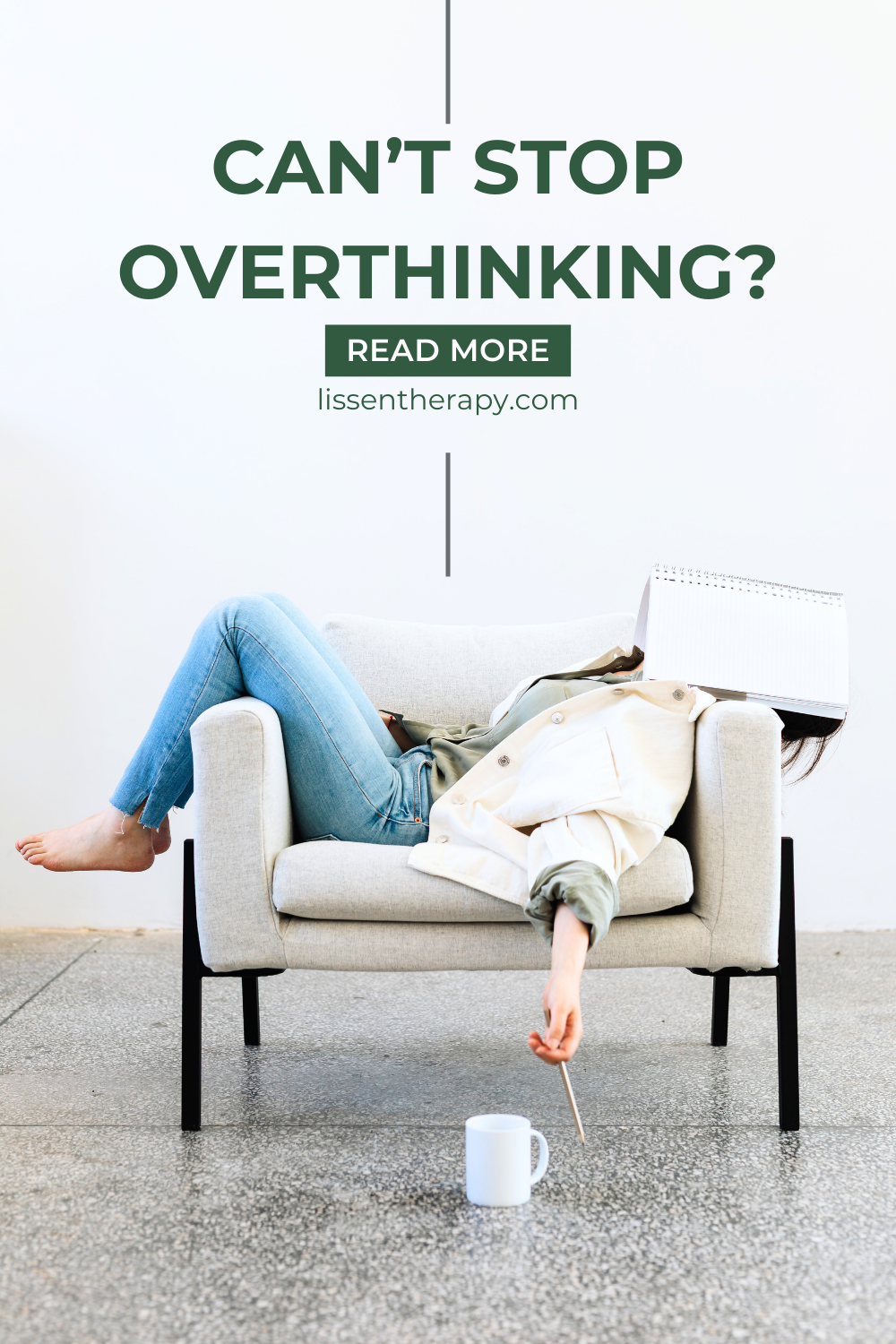

Can’t stop overthinking or replaying conversations in your head? A therapist explains why rumination happens, how anxiety affects the nervous system, and what actually helps your mind rest.