

How to Reconnect With Yourself When You’ve Lost the Thread
This post contains affiliate links. I may earn a small commission at no cost to you. I only recommend products I'd genuinely suggest to a client.

There's a particular kind of disorientation that doesn't have a dramatic origin story.
You didn't wake up one day and decide to stop knowing yourself. It happened gradually, through years of putting other people first, of managing how you came across, of making yourself smaller or more palatable or easier to be around. Through relationships that required you to disappear a little. Through survival, basically. Through doing what you had to do.
And now you're here, somewhere on the other side of all that, and someone asks what you want, for dinner, for your life, for yourself, and you realize you genuinely don't know. Not because you're careless or unfocused or haven't done enough inner work. But because you spent so long overriding your own signals that they've gotten quiet. Or because you learned, at some point, that your needs weren't particularly welcome. Or because you've been in survival mode for so long that there hasn't been space for anything else.
If that's where you are, I want to say this clearly: you didn't lose yourself because you failed. You lost the thread because circumstances required it. And finding it again isn't about some dramatic reinvention. It's quieter than that, and slower, and more ordinary than most people expect.
Why big questions don't work yet
When people decide they want to reconnect with themselves, the instinct is usually to ask the big questions. Who am I? What do I really want? What's my purpose? What should my life look like?
These questions feel like they should be the starting point. They're not. And if you've tried to answer them and come up mostly blank, or anxious, that's not a sign that you're especially lost. It's a sign that your nervous system isn't ready for them yet.
Big existential questions require a certain groundedness to answer. They require a body that feels safe enough to have preferences, an inner life that isn't entirely occupied with bracing for the next thing. If you've been in survival mode, chronically stressed, in a difficult relationship, people-pleasing your way through your days, that groundedness isn't available yet. And asking who am I when your nervous system is still in high alert doesn't produce insight. It produces overwhelm.
This is why reconnection doesn't start with identity. It starts with safety. With regulation. With the much smaller, much more accessible question: what does my body need right now?
If this resonated, these are some of the resources I recommend for women starting to reconnect with themselves and regulate their nervous system.
Start with noticing, not changing
One of the most counterintuitive things about this process is that you don't have to do anything differently right away. You just have to start paying attention.
Notice what drains you after certain conversations, the particular tiredness that follows interactions where you performed okayness or managed someone else's emotions. Notice what soothes you without explanation, the things that make your body feel slightly less braced, even if they seem small or irrational. Notice where you carry tension, what feels heavy, what makes you want to leave a room.
You're not trying to analyze or fix any of this yet. You're just practicing the act of paying attention to yourself, which, for many women who've spent years overriding their own signals, is more radical than it sounds.
Awareness is how the thread gets picked back up. Not through force or discipline or deciding to be a different person. Through attention. Through the simple, repeated act of asking: what's actually happening in me right now?
Your body has been talking. It's worth starting to listen.
If you've spent years overriding your needs, saying yes when your body said no, staying in situations that felt wrong, suppressing emotions to keep the peace, your body hasn't gone silent. It's been communicating this whole time, in the only language available to it.
The tight chest before a conversation you're dreading. The heaviness that descends after spending time with certain people. The shallow breathing when you're about to say something you don't mean. The way your whole system seems to exhale when you cancel plans you never wanted to make.
These aren't random physical sensations. They're information. They're your nervous system trying to tell you something about what's working and what isn't, what feels safe and what doesn't, what you actually want versus what you've been performing wanting.
Reconnection often begins the moment you stop treating these signals as inconveniences to push through and start treating them as data worth taking seriously. Not why am I tense, let me logic my way out of this, but I'm tense, that means something, let me sit with it for a second.
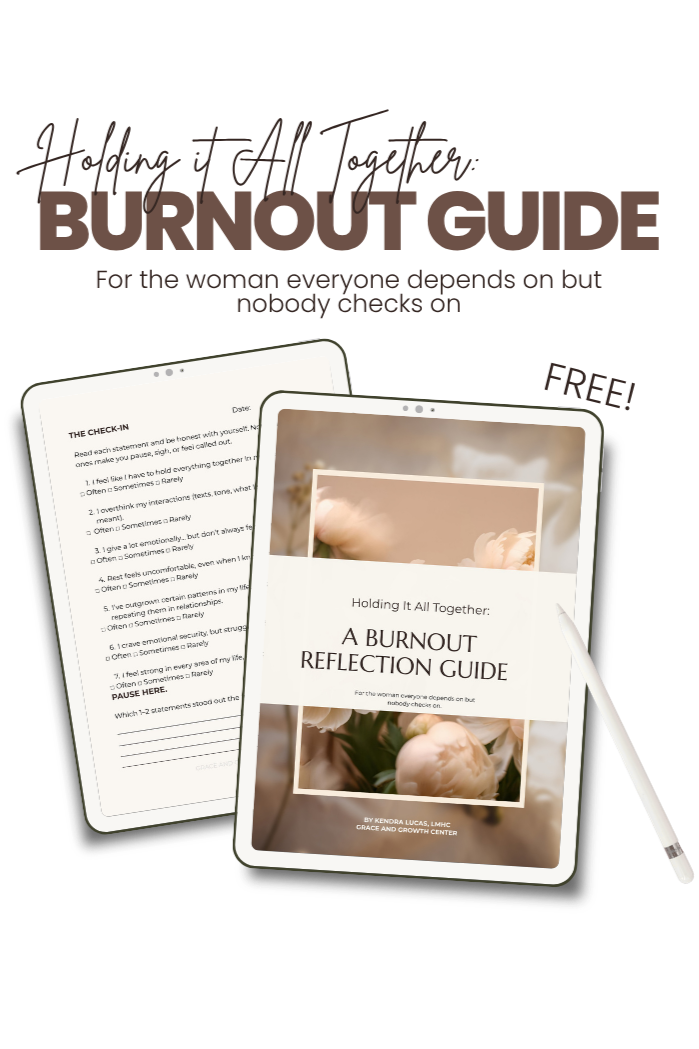
Feeling Like You're Holding Everything Together?
This free guide includes 5 powerful prompts to help you identify what's draining you, where you're carrying too much, and what needs your attention right now.
Reconnection lives in the smallest moments
There's a tendency to think that reconnecting with yourself requires a big gesture, a trip, a major life change, a week-long retreat, a complete overhaul of how you're living. Sometimes those things help. But they're not where the actual work happens.
The actual work happens in the ordinary moments that most people barely notice.
Resting when you're tired without spending the whole time feeling guilty about it. Saying let me think about that before automatically agreeing to something. Choosing the thing you actually want for dinner instead of deferring to whatever requires the least negotiation. Leaving a conversation that's depleting you instead of staying out of obligation. Wearing the thing you like instead of the thing you think you're supposed to like.
These sound almost embarrassingly small. But each one of them is a moment where you treat your own experience as real and worth honoring. And each one sends a signal to your nervous system, one that it very much needs to receive: I am allowed to take up space here. My preferences matter. I can be trusted to know what I need.
That signal, repeated enough times, is what eventually becomes self-trust.
Discomfort doesn't mean you're doing it wrong
As you start to honor yourself more, to say no, to rest, to choose based on what you actually want rather than what keeps everyone around you comfortable, discomfort will show up. Sometimes a lot of it.
Guilt. A nagging sense that you're being selfish. The urge to undo it, to go back, to apologize for having needs. The anxiety that comes with breaking a very old pattern.
This is not a sign to stop. It's a sign that something real is shifting.
If you learned early that prioritizing yourself led to conflict, withdrawal of affection, or being made to feel like you were too much, your nervous system is going to resist. It's going to send alarm signals when you do things differently, because doing things differently is unfamiliar, and unfamiliar registers as threat before it registers as growth.
You can feel the discomfort and keep going anyway. Not by forcing yourself through it, but by understanding what it is. It's an old response meeting a new behavior. It will become less intense over time, as your system accumulates evidence that self-honoring doesn't lead to the disasters it was once braced for.
Consistency matters more than intensity
There's a particular trap that high-achieving, self-aware women often fall into around healing: doing it intensely. Journaling for hours, reading every book, trying to have the insight that breaks the pattern open all at once.
Reconnecting with yourself doesn't work that way. It doesn't happen through breakthroughs. It happens through the accumulation of small, consistent moments of self-honoring, done repeatedly, even imperfectly, over a long period of time.
Small acts of following through on your own feelings. Small acts of rest that aren't earned or justified. Small acts of honesty in low-stakes moments. Over time, these build the thing that nothing else can shortcut: trust. Trust that your instincts are real. Trust that you can handle what comes up. Trust that you won't abandon yourself.
That trust is the foundation everything else stands on. And it's built in the unglamorous, ordinary moments, not in the dramatic ones.
These moments matter even better when your environment supports them. Here is a list I recommend to women who are creating that kind of space.
You don't need to know who you are yet
There's a lot of pressure, in the personal development world, to arrive somewhere. To have clarity. To know your values, your purpose, your authentic self, your non-negotiables.
You don't have to have any of that right now.
What you need at the beginning of this isn't answers. It's curiosity. The willingness to ask what feels true today, just today, not forever. What do I need more of? What's been feeling like too much? What would I do if I weren't worried about how it looked?
Curiosity creates space. Self-criticism shuts it down. And most people who are disconnected from themselves are not suffering from a lack of self-criticism. They're suffering from an excess of it.
Go gently. The version of you that knows herself clearly is not behind a locked door that requires more discipline to open. She's closer than that, and she responds to patience and attention far more reliably than to pressure.
Coming home is a relationship, not a destination
Reconnecting with yourself isn't a project you complete. It's a relationship you keep choosing.
There will be days when you feel clear and grounded and genuinely yourself. And there will be days, sometimes after a lot of good days, where you feel disconnected again, uncertain again, like you've lost the thread again.
Those days are not evidence of failure. They're evidence of being human, living a life with real pressures and real relationships and a nervous system that sometimes still defaults to old patterns. They're not regression. They're just part of the texture of this.
The relationship you're building is with yourself, and like any real relationship, it requires showing up even on the hard days. Not perfectly. Not with full clarity. Just with a little more willingness to listen than you had before.
That's enough. That's actually the whole thing.
For a lot of high-achieving women, this rebuilding process also means getting honest about what they actually want, not just in relationships, but in life. This list is a great start.
12 journal prompts for understanding yourself deeper
The last 4 might make you look at yourself differently…
What do I need more of in my life right now?
What do I keep saying I don't care about that actually matters to me?
What am I tolerating because I'm afraid of what happens if I don't?
When do I feel most like myself?
What version of myself am I trying to prove to other people?
What am I currently avoiding?
What do I wish people understood about me?
What makes me feel emotionally safe?
What do I need to forgive myself for?
What am I afraid would happen if I started putting myself first?
What part of my life feels out of alignment?
What do I already know deep down that I keep asking for permission to accept?
KEEP READING
More for the high-achieving woman.


Ready to stop reading about it and actually change it?
Book a free 15-minute consultation — no pressure, no commitment.

Personal growth doesn't update everyone's expectations at once. Here's why change feels harder when the people around you haven't caught up.