

If Your Mind Won’t Stop Replaying Everything: A Guide to Overthinking, Heartbreak & Self-Trust
This post contains affiliate links. I may earn a small commission at no cost to you. I only recommend products I'd genuinely suggest to a client.

You ever catch yourself replaying a conversation like a movie clip you can't exit? The things you wish you said. The red flags that are so obvious now. The what ifs, the why didn't I, the did he ever even—
It's like your brain keeps digging for answers you never received, hoping that if you analyze it enough, the pain might finally make sense.
That's not weakness. That's not you being dramatic. That's your nervous system doing exactly what it was designed to do when something that mattered breaks, searching for safety, searching for meaning, searching for a clean ending in a story that didn't give you one.
Why You Keep Going Back
When we love deeply, we attach. And when that bond breaks — whether through a breakup, a betrayal, or a slow emotional drift that nobody officially named, the mind goes into a kind of survival mode. It replays the story because it's trying to make meaning out of the loss. It's looking for the moment things shifted, the thing you missed, the explanation that would make it all add up.
But here's what that loop can't tell you: replaying isn't resolving. Thinking isn't healing. And analysis isn't closure.
Rumination is the brain's attempt to solve an unfinished emotional equation. The mind searches for a clean ending, but grief rarely offers one. And so you go back. You stare at pages already read, hoping the words will change.
They don't. But you can.
This connects closely to why relationship anxiety makes you overthink everything, the same nervous system that kept you hypervigilant inside the relationship often stays on high alert long after it ends. The loop doesn't automatically stop just because the relationship did.
What You're Really Holding On To
Sometimes we keep thinking about someone not because we want them back exactly, but because losing them means losing the hope attached to them. It's not just the person you miss, it's the future you imagined, the identity you built around us, and the quiet comfort of what was familiar, even when familiar wasn't always good.
Letting go can feel like stepping into the unknown without a map. Like agreeing to mourn not just the relationship, but the version of yourself who still believed it could work.
That grief is real. It deserves to be taken seriously rather than rushed past. But there's something worth sitting with on the other side of it:
Healing is not forgetting them. Healing is remembering you.
The Truth About Closure
Closure is not a conversation. Closure is a decision.
It's the moment you stop waiting for an explanation that, honestly, probably wouldn't satisfy you anyway. Because what you're really looking for isn't their words, it's permission to trust your own experience. And that permission was never theirs to give.
You don't need their apology to validate your pain. You don't need their explanation to trust what you felt. You don't need their version of events to know that yours was real.
Read that again slowly.
Is Your Anxiety Just... How You Function Now?
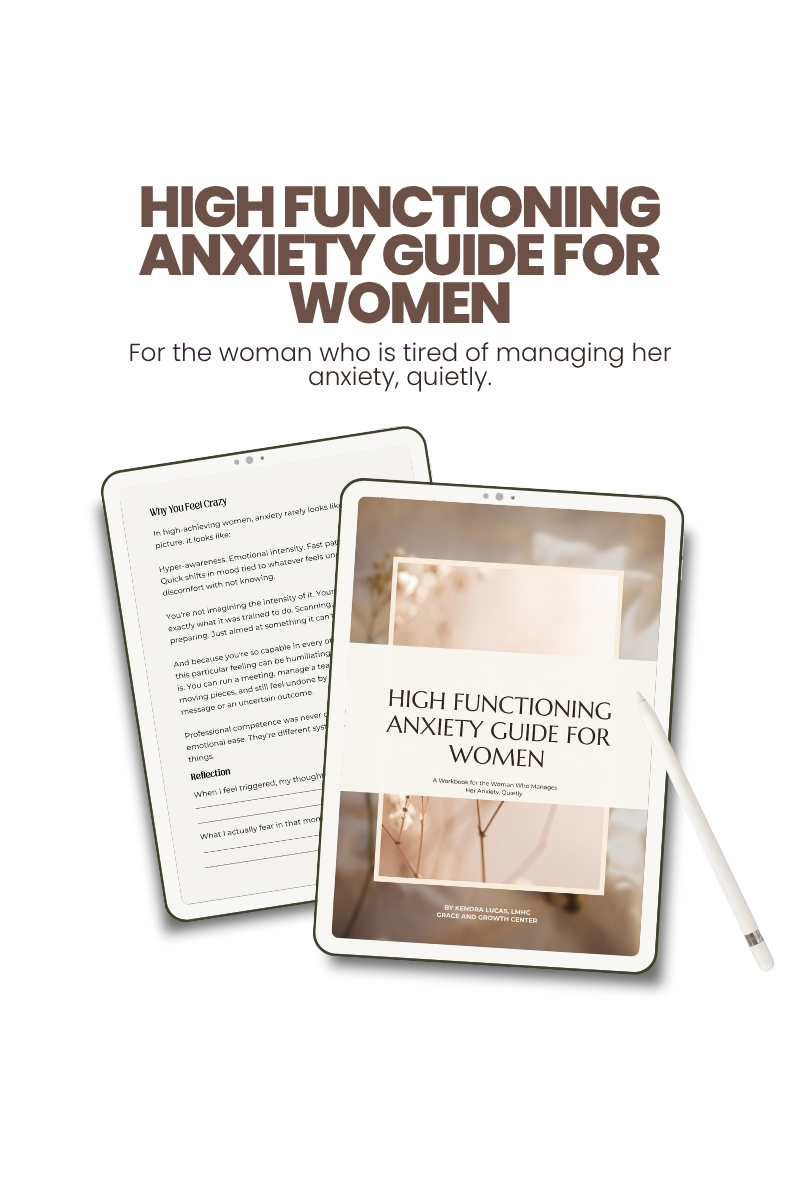
This free guide helps you recognize the difference between productive anxiety and the kind that's quietly running your life, so you can start responding to it instead of just managing it.
From Replaying to Reflecting
There's a pivot available to you that changes everything — not from thinking to not thinking, but from replaying to reflecting. One keeps you anchored to what already happened. The other helps you understand what it means going forward.
Instead of rereading the past looking for a different ending, start asking different questions. What did this experience reveal about what you actually need? Where did you abandon yourself, and how do you want to choose differently? What version of you is quietly trying to emerge from this pain?
Reflection creates meaning. Replay keeps you trapped. And your power lives in the story you tell yourself now, not the one that already happened.
If you're finding that the overthinking has started bleeding into other areas — the way you show up at work, how present you can be in friendships, the exhaustion of carrying it all — it might be worth reading abouthow burnout and emotional depletion intersect. The mental load of processing heartbreak is real and it doesn't stay contained.
The Small Acts That Actually Break the Loop
Healing doesn't demand a dramatic transformation. It asks for small, honest choices made repeatedly over time. Going for a walk instead of checking their page. Writing to yourself instead of about them. Not responding to the late-night text, even when every part of you wants to. Letting yourself cry instead of managing the feeling into something more presentable.
These aren't grand gestures. They're small acts of self-honoring — and each one quietly loosens the attachment, one thread at a time. Every time you choose yourself, the loop gets a little quieter.
A good journal is genuinely one of the most useful tools for this kind of work — not as a place to vent in circles, but as a structured space to process, reflect, and track your own growth through it. These are some of my favorite journals for self-reflection and emotional processing, and this list of books for women healing from relationship patterns includes several I return to and recommend often for exactly this season.
For more support, the Anxious Attachment Healing Starter Pack has tools specifically designed for the nervous system piece, the part of you that's still bracing, still scanning, still waiting for the other shoe to drop.
You're Not Behind. You're Rebuilding.
You're not crazy for replaying it. You're not pathetic for still caring. You're not behind for not being over it yet.
You're grieving. You're processing. You're learning where your heart needs holding, and that is not small work.
If you've been sitting inside this loop for a while and feel like you're not moving the way you want to, that's exactly what therapy is for. Not to fast-forward your healing or tell you to feel differently, but to help you understand what's underneath the replaying, and to build enough internal safety that your nervous system can finally start to let go.
At Grace and Growth Center, this is the kind of work I do with women who are smart, self-aware, and still stuck. If that's you, you're in the right place.
Learn more about therapy for relationship patterns and emotional healing at Grace and Growth Center
Journal Prompts for Self-Trust
When was the last time I ignored my intuition, and what happened afterward?
What decisions do I keep asking other people to make for me?
What does my intuition usually sound like before fear gets involved?
Where in my life do I already trust myself?
What am I afraid will happen if I make the wrong decision?
What evidence do I have that I can handle hard things?
What do I know to be true, even if it's uncomfortable?
Where am I waiting for permission that I don't actually need?
What would I choose if I trusted myself completely?
How can I practice trusting myself in one small way today?
What mistake have I never forgiven myself for, and what would compassion say instead?
What does becoming someone I can rely on look like?
When have I made myself proud simply by listening to my gut?
What part of me already knows the answer?
What kind of woman am I becoming as I learn to trust myself?
KEEP READING
More for the high-achieving woman.


Ready to stop reading about it and actually change it?
Book a free 15-minute consultation — no pressure, no commitment.

High-achieving women are often the last to seek support, even when they're struggling. Here's why it happens and what getting help can actually look like.