
The Anxious Attachment Healing Starter Pack: What I Recommend to Every Client Who Loves Too Hard
This post contains affiliate links. I may earn a small commission at no cost to you. I only recommend products I'd genuinely suggest to a client.

If you've ever been told you're "too much" in a relationship, you're not.
You're anxiously attached. And there's a meaningful clinical difference between those two things.
"Too much" implies a character flaw, something to fix or suppress. Anxious attachment is a nervous system pattern, a survival strategy your body developed in response to early experiences with love that felt unpredictable, inconsistent, or conditional. It's not who you are. It's what you learned.
The good news is that attachment patterns are not permanent. They're malleable. With the right understanding, tools, and support, anxious attachment can heal, and the way you show up in relationships can fundamentally change.
Below is what I recommend to every client who comes to me carrying the weight of anxious attachment. These are the resources I return to most in my practice, the ones clients thank me for months later, and the ones I genuinely believe move the needle.
What Anxious Attachment Actually Is, And Isn't
Before the list, a brief clinical foundation because I want you to understand what you're healing, not just how to manage it.
Anxious attachment develops most often when early caregiving was inconsistent, loving and available sometimes, distracted or emotionally unavailable other times. The child's nervous system responds by staying hypervigilant: always monitoring for signs of disconnection, always working to secure the attachment, always bracing for abandonment.
That child grows up and brings that same nervous system into adult relationships.
She overanalyzes texts because her brain learned that small signals carry big information. She overfunctions because effort always felt like the way to keep love close. She needs reassurance not because she's needy but because her nervous system never got a consistent enough experience of love to feel truly safe in it.
Healing anxious attachment means teaching your nervous system, slowly, consistently, that safe love is possible and that you don't have to earn it.
These resources support that process.
The Anxious Attachment Healing Starter Pack
Start here — understanding your pattern:
"Attached" by Amir Levine and Rachel Heller→ This is always the first book I recommend. It breaks down the three attachment styles, anxious, avoidant, and secure, with clarity and without judgment. Reading it feels like someone finally gave you the manual to your own emotional wiring. Understanding your pattern is the foundation everything else is built on. Get it here
"Anxious in Love" by Carolyn Daitch and Lissah Lorberbaum → While Attached gives you the framework, this book gets practical. It's written specifically for people with anxious attachment and walks through concrete strategies for managing the anxiety in real relationship moments — the waiting, the spiraling, the urge to seek reassurance. Clinical and accessible. Get it here
"Love Me, Don't Leave Me" by Michelle Skeen → This one goes deeper into the core beliefs underneath anxious attachment, the fear of abandonment, the sense of unworthiness, the schemas that run quietly in the background of every relationship. It's workbook-style which makes it especially useful for active processing rather than passive reading. Get it here
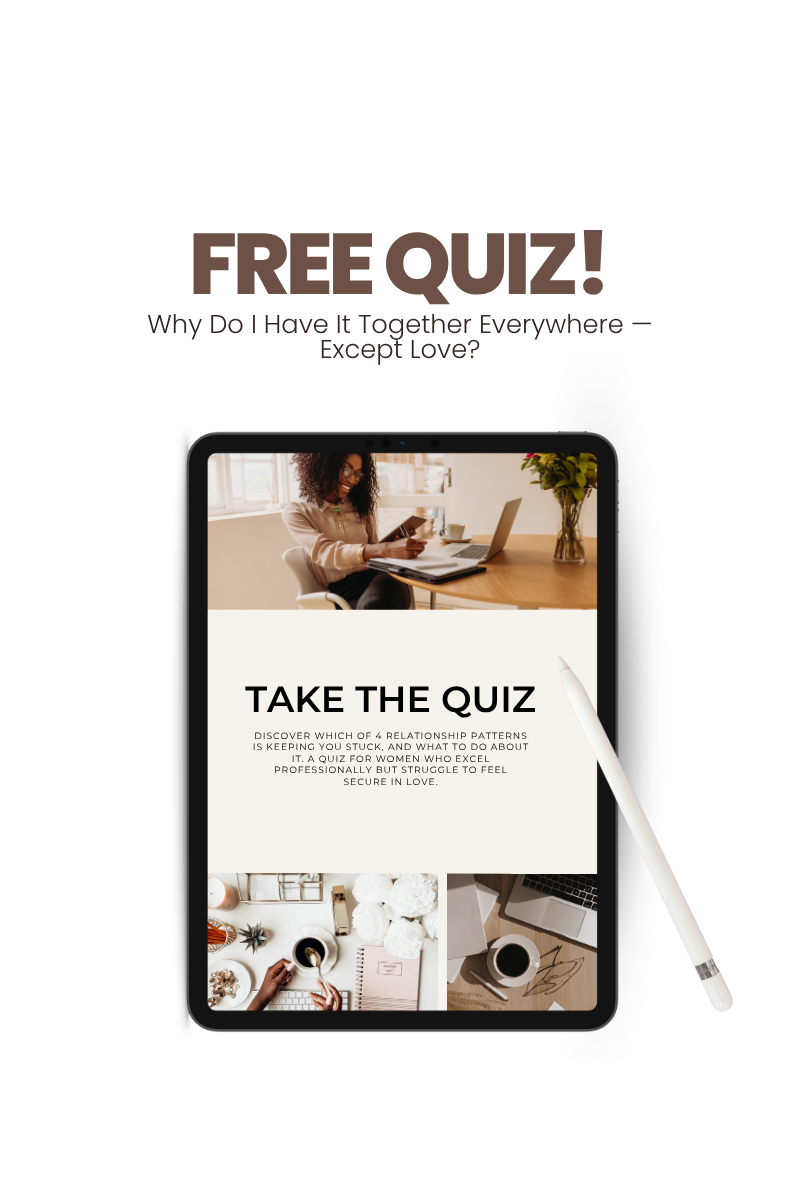
Why Do You Have It Together Everywhere — Except Love?
Take this free quiz to name the exact pattern showing up in your relationships, so you finally understand why it keeps happening.
For your nervous system:
70 Vagus Nerve Exercises - Cards for Nervous System Regulation → Anxious attachment is a nervous system issue as much as it is a thought pattern issue. Having a tangible tool for regulation, something you can reach for when you're spiraling at 11pm over an unanswered text, is essential. This deck gives you grounding and regulation prompts in a format that's actually accessible when your prefrontal cortex is offline. Get it here
The Meditation Book: The Essential Meditation for Beginners to Find Peace, Reduce Stress, and Improve Mental Health → Consistent meditation practice is one of the most evidence-backed interventions for anxiety and nervous system dysregulation. For women with anxious attachment specifically, body scan meditations and loving-kindness practices have particular clinical value. Even ten minutes a day compounds significantly over time. Get it here
Pura Wex Nutrition — Magnesium Gummies → Magnesium glycinate is one of the most well-researched supplements for anxiety support. It supports the nervous system at a physiological level and improves sleep quality, both of which matter enormously when you're doing attachment healing work. I'm not a doctor and this isn't medical advice, but it's something I mention often in sessions and many clients find it helpful as part of a broader support routine. Get it here
For your journaling practice:
How To Heal An Anxious Attachment Style: A Self Therapy Journal to Conquer Anxiety & Become Secure in Relationships → Journaling is one of the most powerful tools for anxious attachment healing, but only when the prompts move you toward insight rather than rumination. This journal is specifically designed to help you process relationship patterns, identify triggers, and build self-awareness outside of the therapy room. Get it here
"The Artist's Way" Morning Pages Journal → Morning pages — three pages of longhand stream of consciousness writing first thing in the morning, is one of the most effective practices I know for externalizing the anxious inner monologue. Getting it out of your head and onto paper before the day starts changes the entire texture of your anxiety. Get it here
For going deeper:
"The Body Keeps the Score" by Bessel van der Kolk → For women whose anxious attachment is rooted in more complex relational trauma, this book is essential. It explains why healing can't be purely cognitive, why the body holds the patterns even when the mind understands them, and what trauma-informed healing actually looks like. Get it here
"Adult Children of Emotionally Immature Parents" by Lindsay Gibson → A significant amount of anxious attachment traces back to emotionally immature parenting, caregivers who were inconsistent, dismissive, or who made their children responsible for their emotional state. This book is one of the most validating reads I've ever recommended. Many clients have told me it changed everything. Get it here
What to Do After You've Read the Books
Resources are a starting point, not a finish line.
If you're ready to understand your specific attachment pattern, not just the general framework but the exact version that's been running your relationships, start with my free quiz. It takes three minutes and identifies which of four profiles fits you, along with what healing looks like for your specific pattern.
If something in this post stirred something in you, that's not an accident. The patterns we carry in love don't always have obvious names, but they do have names.
The quiz is a good place to start finding yours. It takes about two minutes, it's free, and it might give language to something you've been feeling for a while but couldn't quite articulate.
And if you're in Texas or Florida and you're ready to do this work with support, Grace & Growth Center has virtual therapy openings for high-achieving women ready to heal their relationship patterns for good.
→ Book a free consultation: 15 minute call to start your journey
KEEP READING
More for the high-achieving woman.


Ready to stop reading about it and actually change it?
Book a free 15-minute consultation — no pressure, no commitment.

You know he's not good for you. Your friends see it. Your body feels it. So why can't you walk away? This post gets honest about the real reasons letting go feels impossible, even when you know better.