

This post contains affiliate links. I may earn a small commission at no cost to you. I only recommend products I'd genuinely suggest to a client.
It doesn't always look like losing yourself all at once. Sometimes it happens slowly, in the smallest moments, until one day you look up and don't recognize the woman looking back.

Self-abandonment rarely announces itself. It doesn't arrive with a warning or a dramatic turning point. It creeps in through the small compromises, the swallowed opinions, the needs you learned to dismiss before anyone else could dismiss them for you.
And for high-achieving women especially, it can be disguised as something that looks almost admirable; maturity, flexibility, being "easy-going," prioritizing the relationship. Over time though, those quiet sacrifices accumulate. And what's left is a woman who barely recognizes herself in her own life.
What self-abandonment actually looks like
Most women I work with don't come to therapy saying "I've been abandoning myself." They come in saying they feel tired. Disconnected. Resentful without a clear reason. Or they come in wondering why they feel so alone inside a relationship that, from the outside, looks completely fine.
Self-abandonment in relationships is rarely dramatic. It shows up in the moment you ignore your own discomfort to avoid conflict. In the way you've become the one carrying the emotional weight of the relationship, almost entirely on your own, while your partner moves through it lightly. In the pattern of working hard to understand someone who shows little interest in understanding you.
In tolerating things you once said clearly, to yourself, that you never would. In the gradual adjustment of how much you say, how much you ask for, and how much space you allow yourself to take up, all in service of keeping things stable.
Over time, this can look like patience. It can look like loyalty. It can even look like love. And it's worth saying: relationships do require compromise, grace, and the willingness to put someone else first sometimes. But there is a meaningful difference between growing within a relationship and slowly disappearing inside of one.
“Self-abandonment isn’t always a dramatic loss. Sometimes it’s just saying ‘I don’t mind’ one too many times, until you genuinely can’t remember what you actually want.”
The 4 quiet ways it shows up
The first is making yourself smaller to keep the peace. You've learned, through experience, not imagination, that voicing your needs creates tension. So you stop voicing them. You become the low-maintenance partner, not because you have no needs, but because expressing them hasn't felt safe or worth the aftermath.
The second is over-explaining and over-apologizing. Every boundary comes with a paragraph of justification. Every "no" is followed by guilt. You feel responsible for how other people receive your truth, so you soften it and qualify it until it barely resembles what you actually meant to say.
The third is losing track of what you actually want. What do you want for dinner? For your weekend? For your life? If the answer feels foggy, if you automatically defer before you've even checked in with yourself, that's self-abandonment doing its quiet work. The habit of outsourcing your preferences starts small and spreads.
If reconnecting with what you actually want feels unfamiliar, the Worry Journal is a low-pressure place to start. It's $7, it's simple, and it's designed specifically for the woman whose inner voice has gone quiet.
Journaling can be one of the simplest ways to start reconnecting with your own voice. Here are the journals I recommend most.
The fourth is letting your mood become dependent on theirs. When they're distant, you panic. When they're warm, you finally feel okay. You've outsourced your emotional regulation to someone else's behavior, and you're exhausted by the unpredictability of it. This is one of the most common patterns tied to anxious attachment, and one of the most important to understand.
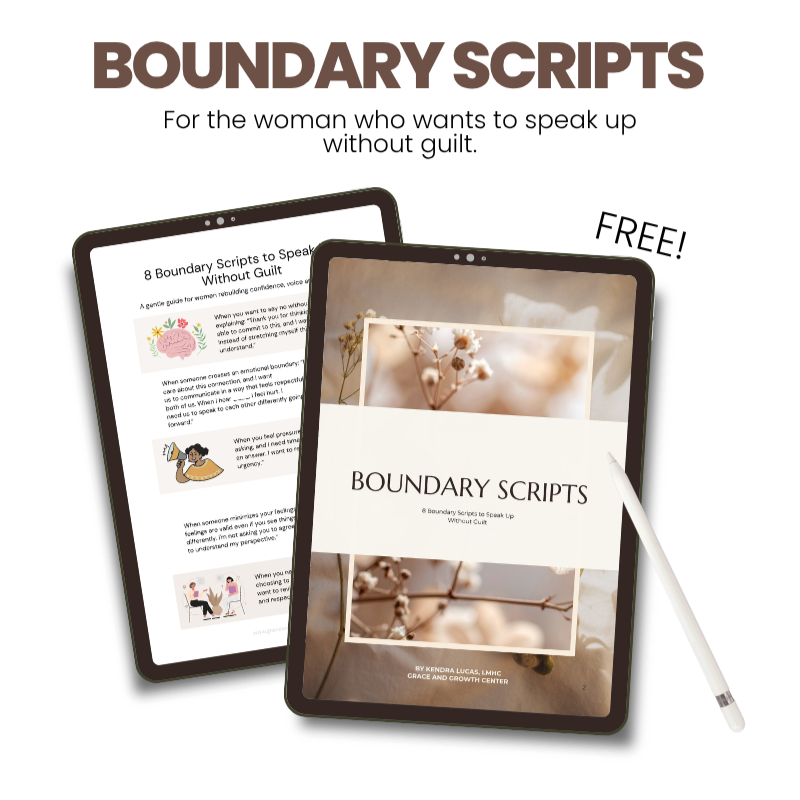
Know What You Need to Say — Just Not How to Say It?
This free guide gives you the exact words for the boundary conversations you keep avoiding, so you can protect your peace without over-explaining yourself.
Why High-Achieving Women Are Especially Vulnerable to This
This isn't about weakness. It's about conditioning.
Many women are taught, directly and indirectly, that maintaining a relationship is a reflection of their worth. So when something feels off, the instinct is to turn inward first. Maybe I'm asking for too much. Maybe I need to communicate differently. Maybe if I love harder, or give it more time, things will change.
That internal audit can become a deeply ingrained habit. And for high-achieving women who are already wired to solve problems, optimize outcomes, and take responsibility, it's an especially easy trap to fall into. You bring the same work ethic to your relationships that you bring to everything else. The difference is that in love, working harder doesn't always fix what's actually broken.
If any of this is resonating and you want to understand your specific patterns more deeply, this quiz might be a useful place to start.
What Healthy Relationships Actually Require
Healthy relationships don't ask you to shrink yourself to sustain them. They don't require you to silence your needs, override your intuition, or spend your energy proving that you deserve to stay. They allow space for honesty, even when honesty is uncomfortable. They allow space for boundaries. They allow you to remain fully, recognizably yourself.
For many of the women I work with, healing begins with a single realization: I have been showing up for this relationship. But I haven't been showing up for myself. That awareness, as uncomfortable as it is, is where things begin to shift.
The goal isn't to become less loving. The goal is to stay connected to yourself while you love someone else. Because the most sustainable relationships aren't built on self-sacrifice, they're built on two people who are both allowed to exist fully within them.
A Question to Sit With
Where might you be silencing your own needs in order to maintain peace? And what would it look like, even in one small, quiet way,to gently stop doing that?
If you want somewhere to start outside of therapy, here are the tools I'd put in your hands first:
The Worry Journal & Anxiety Reflection Workbook → for reconnecting with your own voice ($7)
The Healing Library → free guides for the woman who's holding too much
The Quiz → to name the pattern underneath all of this
KEEP READING
More for the high-achieving woman.


Ready to stop reading about it and actually change it?
Book a free 15-minute consultation — no pressure, no commitment.

High-achieving women are often the last to seek support, even when they're struggling. Here's why it happens and what getting help can actually look like.