

Why High-Achieving Women Keep Ending Up in the Same Relationship. And How to Finally Break the Cycle
This post contains affiliate links. I may earn a small commission at no cost to you. I only recommend products I'd genuinely suggest to a client.
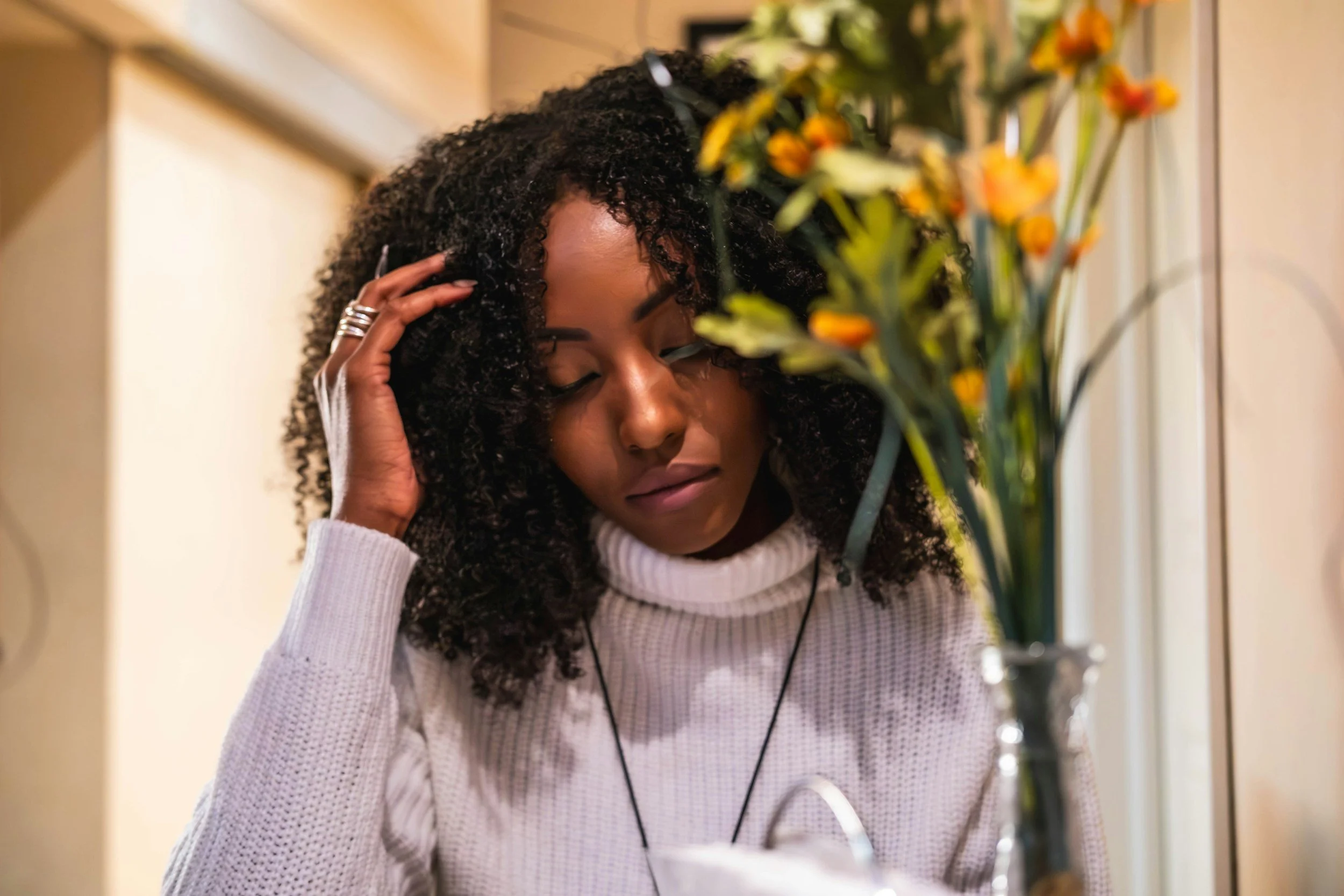
You swear this relationship is going to be different.
And in the beginning, maybe it is. Maybe this person communicates better. Maybe they seem more emotionally available than the last one. Maybe you catch yourself feeling hopeful in a way you haven’t in a long time.
But eventually, something familiar starts happening again. You notice yourself overthinking texts. Monitoring shifts in energy. Explaining your needs carefully so you don’t seem “too much.” Carrying the emotional weight of the relationship while trying not to ask for too much in return.
And somewhere in the middle of it all, you have the same terrifying thought: How did I end up here again?
This is one of the most frustrating experiences for high-achieving women because by this point, you’ve usually already done the work. You’re self-aware. You’ve read the books. You’ve journaled about your patterns. You can probably explain your attachment style better than half the internet.
So when the same relationship dynamics keep showing up anyway, it can start to feel deeply personal. Like maybe there’s something wrong with you that you still haven’t fixed yet.
But repeating relationship patterns is rarely about intelligence. And it’s almost never about a lack of self-awareness.
It’s usually about familiarity.
Why self-awareness alone doesn’t break the cycle
One of the hardest truths about healing is realizing that insight and change are not the same thing.
You can understand exactly why you over-give in relationships and still find yourself doing it. You can recognize emotional unavailability early and still feel intensely drawn to it. You can know a relationship is unhealthy while simultaneously feeling emotionally attached to keeping it alive.
A lot of relationship dynamics get wired into us long before we ever start dating. The environments we grew up in quietly taught us what connection feels like, what love requires from us, and what role we have to play to stay emotionally safe.
For some women, love became associated with earning. Being helpful. Being easy. Anticipating needs before anyone had to ask. Learning how to stay emotionally hyperaware so conflict, rejection, or abandonment could be avoided before it happened.
Those adaptations may have made sense at one point in your life. But they often follow women directly into adulthood and shape the kinds of relationships they unconsciously gravitate toward.
That’s why so many high-achieving women end up confused by their own patterns. Intellectually, they know better. But emotionally, the dynamic still feels familiar enough to feel like love.
The relationship dynamic often mirrors something older
One of the things people don’t talk about enough is how emotionally familiar relationships can override emotionally healthy ones.
If inconsistency was normalized early in life, stable relationships can initially feel underwhelming. If you had to work hard for emotional closeness growing up, relationships that require effort and emotional chasing may feel strangely compelling.
A lot of women find themselves repeatedly attracted to emotionally unavailable partners and assume it means they’re choosing wrong. But often, the deeper issue is that their nervous system has learned to associate emotional intensity with connection. So the relationship feels meaningful precisely because it feels uncertain. The anxiety in relationships becomes confused with chemistry. The inconsistency becomes confused with passion. The emotional rollercoaster becomes confused with love.
And because high-achieving women are often incredibly resilient, they tend to stay in these dynamics longer than they should. They problem-solve. They overextend empathy. They try harder. They become more patient. More understanding. More emotionally accommodating.
The same strengths that help them succeed everywhere else start quietly hurting them in relationships.
High-achieving women are often rewarded for overfunctioning
A lot of successful women have spent most of their lives being praised for how much they can carry.
You’re dependable. Self-aware. Emotionally intelligent. You know how to keep going even when you’re overwhelmed. You know how to manage pressure without falling apart publicly.
But relationships have a way of exposing the cost of that. Because eventually, many high-achieving women realize they are functioning as the emotional center of the relationship. They are the communicator, the planner, the caretaker, the one initiating difficult conversations, researching attachment styles at midnight, trying to figure out how to make the relationship healthier while slowly abandoning themselves in the process.
From the outside, it can look like competence. Internally, it often feels exhausting. And over time, many women start noticing that they don’t actually feel emotionally safe in their relationships. They feel responsible for them.
That’s a very different thing.
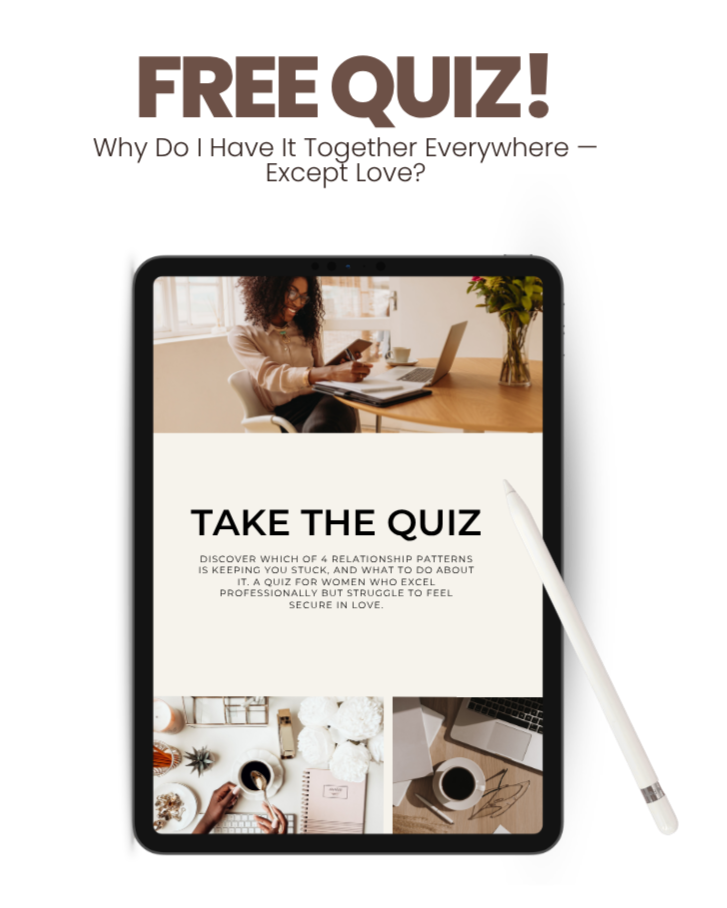
Why Do I Have It Together Everywhere — Except Love?
Discover which of 4 relationship patterns is keeping you stuck, and what to do about it. A quiz for women who excel professionally but struggle to feel secure in love.
Why these patterns are so hard to leave
One of the most painful parts of this cycle is how much shame women carry around repeating it.
They tell themselves they should have left sooner. They wonder why they ignored the signs again. They judge themselves for becoming attached to people who could not fully meet them emotionally.
But relationship patterns are rarely broken through self-criticism.
Especially when the pattern itself is rooted in old beliefs about worthiness, abandonment, emotional safety, or the fear of not being chosen. For many women, the relationship is not just about the relationship. It quietly becomes tied to deeper questions underneath it. That’s why these dynamics can feel so emotionally consuming. They often activate wounds that existed long before the relationship itself.
What healing actually looks like
Healing usually starts becoming possible when women stop asking, “Why do I keep choosing the wrong person?” and start asking, “Why does this dynamic feel so familiar to me?” That question changes everything.
It’s learning how to recognize emotional safety instead of just emotional intensity. Learning how to stop abandoning your own needs to preserve connection. Learning how to tolerate consistency, honesty, and mutuality even when it feels unfamiliar at first.
And honestly, this work is difficult to do entirely alone. Not because you’re incapable of insight, but because these patterns were formed in relationships. They usually heal in relationships too.
That’s why therapy for high-achieving women often goes far beyond communication tips or surface-level dating advice. The deeper work is understanding the attachment patterns, nervous system responses, fears, and emotional conditioning underneath the cycle itself.
At Grace & Growth Center, we help women explore the deeper relationship dynamics keeping them stuck in painful patterns so they can build relationships that feel emotionally safe, connected, and sustainable, not just familiar.
These patterns were formed in your earliest relationships, the ones that taught you what love looks like, what you have to do to keep it, and what happens when it goes away. They made sense then. They're just not serving you now.
Knowing your pattern and changing your pattern are two completely different skills. One lives in your head. The other lives in your nervous system.
KEEP READING
More for the high-achieving woman.


Ready to stop reading about it and actually change it?
Book a free 15-minute consultation — no pressure, no commitment.

Why rounding down your needs feels like peace-keeping, and what it's actually costing you in your relationships. A therapist's take.