

Why Do I Feel Lonely Even When I’m Not Alone?
This post contains affiliate links. I may earn a small commission at no cost to you. I only recommend products I'd genuinely suggest to a client.

You're surrounded by people. Maybe you're in a relationship. Maybe you have a full social life. Maybe you're never actually alone.
And yet, there it is. That quiet, persistent ache. That feeling of being on the other side of a glass wall, watching everyone else connect while you smile and nod and wonder what's wrong with you.
Nothing is wrong with you. But something is worth paying attention to.
Loneliness isn't about who's in the room
Here's the thing most people don't realize: loneliness isn't a measure of how many people are around you. It's a measure of how emotionally connected you feel to them.
You can be in a crowded room and feel invisible. You can share a bed with someone and feel profoundly alone. You can have a full calendar and still come home feeling like no one really knows you.
This is called emotional loneliness, and it's actually far more common than the loneliness that comes from physical isolation. It's the loneliness of being unseen, unheard, or unable to show up as your full self in the relationships you're already in.
Why you might feel disconnected even in close relationships
There's rarely one single reason, but a few patterns come up again and again.
You're not fully being yourself. When you've learned to shrink, to keep the peace, to avoid conflict, to say "I'm fine" when you're not. Real connection becomes impossible. Connection requires two actual people to be present. If you're performing a version of yourself that feels safe but isn't really you, the loneliness makes complete sense. You're not being seen, because you're not fully showing up.
Your emotional needs aren't being met, and maybe you haven't named them. Needs like reassurance, consistency, emotional validation, and real quality time aren't needy or excessive. They're human. But when they go unspoken, because you're afraid of being too much, or you don't want to rock the boat, they quietly turn into distance. Your nervous system registers the gap even when you're trying to talk yourself out of it.
You're mistaking attention for connection. Someone can text you all day, be physically present every night, and still not be emotionally available to you. Real connection requires something more specific: emotional safety, genuine responsiveness, and the kind of vulnerability where both people are actually letting each other in. Without those, your brain will keep registering disconnection no matter how much proximity you have.
Old attachment wounds are still running the show. If you grew up in an environment where love was inconsistent, conditional, or unpredictable, your nervous system learned to stay alert. That hypervigilance doesn't just disappear when you find a stable relationship. It can create a chronic sense of loneliness even when nothing is technically wrong. You might find yourself waiting for the other shoe to drop, or feeling alone in moments that should feel close.
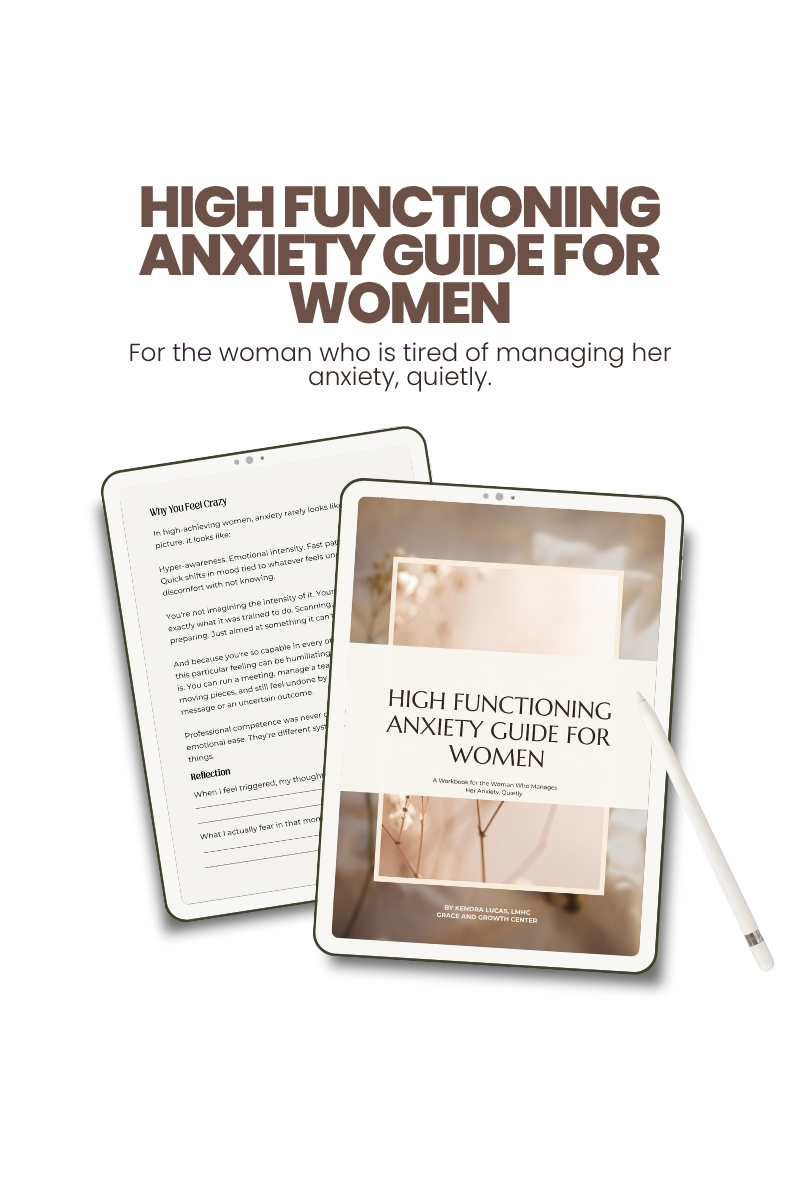
Is Your Anxiety Just... How You Function Now?
This free guide helps you recognize the difference between productive anxiety and the kind that's quietly running your life, so you can start responding to it instead of just managing it.
The difference between being alone and feeling lonely
Being alone is a physical state. Loneliness is an emotional one, and the two don't always go together the way we assume.
Some people are single and feel genuinely at peace. Some people are in long-term partnerships and feel profoundly isolated. The variable isn't the relationship status. It's whether your nervous system feels securely connected to other people, and to yourself.
That last part matters more than it sounds.
What actually helps
Recognizing that your loneliness is emotional rather than circumstantial is the beginning of being able to do something about it. A few places to start:
Get specific about what you need. "I feel disconnected" is true, but it's hard to act on. "I need more consistency" or "I need conversations that go deeper than logistics" is something you can actually bring to a relationship. Naming your needs doesn't make you demanding. It makes you legible to the people who want to show up for you.
Practice saying the vulnerable thing. Loneliness decreases when vulnerability increases, slowly, carefully, in relationships that have earned it. Instead of "you never really open up to me," try "I've been feeling distant lately and I want us to feel closer." One is an accusation that puts people on the defensive. The other is an opening.
Widen your emotional support network. If one person, a partner, a best friend, is carrying the entire weight of your emotional life, the pressure will eventually collapse the connection. Meaningful relationships with other people aren't a betrayal of your primary ones. They're part of how you stay whole.
Take the loneliness seriously rather than talking yourself out of it. It's easy to dismiss, "I have no reason to feel this way," "other people have it so much worse," "I should just be grateful." But loneliness is information. It's your inner life letting you know that something needs attention. When you listen to it instead of judging it, it becomes a compass rather than a wound.
If you want to actually do these exercises rather than just think about it, here are the journals I recommend for exactly this kind of processing work.
You don't have to keep feeling this way
Feeling lonely inside a relationship, or inside a full, busy life, isn't a sign that something is permanently broken. It's often a sign that you've been prioritizing other people's comfort over your own honesty for a long time.
Therapy can be a place to start untangling that. To understand where the disconnection comes from, to practice being known, and to figure out what kinds of connection you're actually craving versus what you've settled for.
If any of this resonated, reading can still be part of the journey, especially when the books are actually asking the right questions. Here's the list I point women toward.
If you found this helpful, you might also like: Why Relationship Anxiety Makes You Overthink Everything and Why Overthinking Ruins Relationships.
KEEP READING
More for the high-achieving woman.


Ready to stop reading about it and actually change it?
Book a free 15-minute consultation — no pressure, no commitment.

Some endings never come with an explanation. Here's how to stop waiting for one and give yourself the closure you never got.