

There’s a Difference Between Protecting Your Peace and Avoiding the Conversation
This post contains affiliate links. I may earn a small commission at no cost to you — I only recommend products I'd genuinely suggest to a client.

"Protecting your peace" has become one of those phrases that can mean almost anything now. It can describe stepping back from a friendship that has become draining, muting a group chat, ending a relationship, taking a break from social media, or deciding that you no longer want to respond to someone who keeps pulling you into the same argument. In a lot of those situations, creating distance can be a healthy choice. There are relationships that require more access to you than they deserve, and learning to recognize that is part of taking care of yourself.
The problem is that the same language can also make avoidance feel like growth.
It is easy to tell yourself that you're protecting your peace when what you're really doing is trying to get away from a conversation you don't want to have. That distinction can be difficult to see because avoidance often brings immediate relief. You don't have to explain yourself or deal with the other person's reaction. You don't have to risk hearing something that changes the way you see the relationship. For a little while, everything feels easier because the source of the tension is no longer in front of you.
Relief, though, is not always resolution.
That matters because the goal of a healthy boundary isn't simply to make an uncomfortable situation disappear. It is to help you decide what you are willing to participate in and what you are no longer willing to carry. Sometimes that decision leads you toward a conversation and sometimes it leads you away from one. The difference is found in the intention behind the distance and what you do with the issue that remains.
Protecting Your Peace Can Require Discomfort
There is a version of boundary-setting that looks much less peaceful than the phrase "protecting my peace" would suggest.
You may have to tell someone that something they said hurt you. A friendship may require an honest conversation about a pattern that has been bothering you for months. You may realize that you've been agreeing to things you don't have the capacity for because you don't want to disappoint anyone. If you're used to keeping things pleasant, being honest about what you need can feel surprisingly uncomfortable.
Healthy boundaries can bring up guilt because they ask you to behave differently than you have in the past. If you've spent years making yourself available whenever someone needs you, the first few times you say, "I can't do that," you may spend the rest of the day wondering whether you were too harsh. If you've built relationships around being easygoing and accommodating, admitting that something no longer works for you can feel like you're creating a problem where there wasn't one.
There was a problem. You just weren't naming it.
That is one reason protecting your peace often requires more self-awareness than simply walking away. You have to become honest about what is happening before you can decide what needs to change. A boundary might sound like, "I don't want to have conversations like this when we're both angry, so I'm going to step away and we can revisit it later." It could mean telling a family member that you're no longer comfortable discussing a particular part of your personal life. It could involve reducing your availability to a person who consistently expects more from you than you're able to give.
The boundary gives you something concrete to stand on. You know what you're asking for, and you know what you will do if the situation continues.
That clarity is part of the peace.
Avoidance Can Feel Like Peace Because the Tension Is Gone
Avoidance is more complicated because it can work in the short term.
You don't send the text because you don't know how to say what you really mean. You let a friendship fade because bringing up the issue feels harder than accepting the distance. You tell yourself that you are "done with the drama" when what you really mean is that you don't want to find out how the other person will respond if you tell them the truth.
There is nothing inherently wrong with choosing distance. The issue is whether you're choosing it because you have reached a clear decision about the relationship or because you are hoping that distance will make the uncomfortable part unnecessary.
That difference can be especially hard to recognize if you've learned to associate conflict with danger. Perhaps growing up, disagreements turned into yelling, withdrawal, punishment, or long periods of tension. Perhaps you were the person who learned to smooth things over because everyone else seemed calmer when you did. Perhaps previous relationships taught you that expressing a need could lead to rejection.
In those circumstances, avoiding a difficult conversation can feel less like avoidance and more like survival. Your nervous system has learned that conflict carries a cost, so creating distance gives you a sense of control.
That deserves compassion. It also deserves examination.
Because an understandable coping strategy can still become limiting when it follows you into relationships that are safe enough for honesty. If every uncomfortable conversation ends with you pulling away, you may eventually find yourself with relationships that are peaceful on the surface but full of things you never said.
The people around you may not even know why you became distant.
You may know exactly why.
That can leave you carrying resentment for something the other person was never given an opportunity to understand or address.
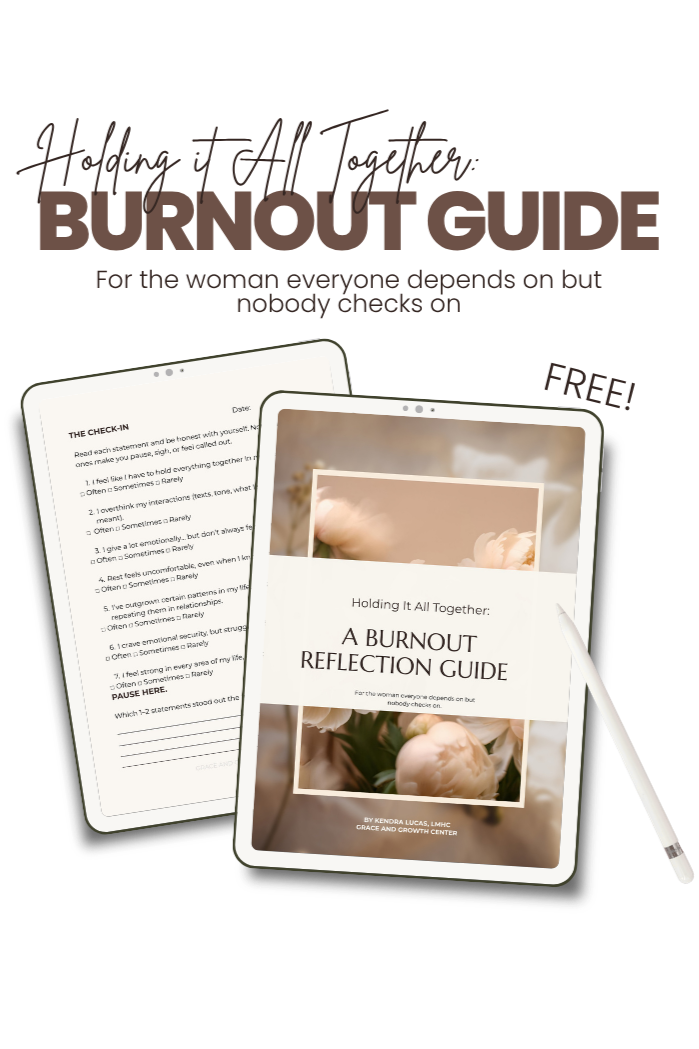
Feeling Like You're Holding Everything Together?
This free guide includes 5 powerful prompts to help you identify what's draining you, where you're carrying too much, and what needs your attention right now.
Not Every Situation Needs a Conversation
There is an important piece of this conversation that gets lost when we talk too broadly about communication and healthy relationships: you are not required to confront everyone who has hurt you.
There are situations where stepping away is the appropriate response. If a person has been abusive, threatening, manipulative, or repeatedly disrespectful of your boundaries, creating distance may be far healthier than trying to have one more conversation in the hope that this time they will understand. Your safety matters more than proving that you communicated perfectly.
You also don't need to explain every decision you make.
There are relationships that have already given you enough information. You may have communicated your needs repeatedly and watched the same pattern continue. At that point, another conversation may not provide clarity. It may simply reopen something you've already worked hard to close.
Protecting your peace can absolutely mean leaving.
The question is not whether you talked to the person before you left. A better question is whether your choice was intentional. Did you make a decision based on what you have learned about the relationship, or are you hoping that avoiding the conversation will keep you from having to face what the relationship actually requires?
Those are two very different places to make a decision from.
The Fear Beneath the Avoidance Is Worth Paying Attention To
A lot of avoidance becomes easier to understand when you ask what you think the conversation will cost you.
Perhaps you're afraid the person will be angry. Maybe you expect them to dismiss what you're saying, turn the situation around on you, or accuse you of being dramatic. You may be worried that expressing your needs will change the relationship, and you don't know whether you're ready to find out what happens after that.
There may also be a fear underneath all of this: the possibility that once you say what you actually think, you will have to make a decision.
It is easier to stay in uncertainty when nothing has been said.
You can tell yourself that things might improve, keep interpreting the other person's behavior, or continue waiting for the right moment. As long as the conversation hasn't happened, the future remains open enough to hold every possibility you want it to hold.
Speaking honestly can close some of those doors. That can be painful. It can also be freeing.
A lot of emotional energy gets spent trying to maintain relationships in an undefined space. You know you're unhappy, but you haven't said why. You know something has changed, but you're still behaving as though it hasn't. You feel resentful about something you've never addressed, then feel guilty for being resentful because technically the other person doesn't know there is a problem.
That is an exhausting way to live.
Peace Does Not Always Feel Peaceful at First
One reason this gets so confusing is that we often expect healthy choices to produce immediate emotional relief.
Real life doesn't work that neatly.
You can make the right decision and still feel sad about it. Setting a boundary can leave you feeling guilty, especially if the other person doesn't like it. Leaving a relationship can bring relief alongside grief. Changing the way you participate in a friendship can make you question whether you're being unfair.
If you're used to measuring your choices by how comfortable everyone else feels, learning to consider your own needs will take some adjustment. Someone else being disappointed does not automatically mean you've harmed them. A relationship changing after you establish a boundary does not automatically mean you shouldn’t set boundaries.
This is one of the harder parts of developing self-trust. You have to become able to tolerate the emotional consequences of your choices without immediately assuming you made the wrong one.
That includes tolerating the possibility that someone will misunderstand you and accepting that you cannot control how another person responds to a reasonable boundary.
An uncomfortable conversation can still be a healthy conversation.
Ask Yourself What You Are Actually Doing
The next time you find yourself wanting to "protect your peace" by creating distance, it may help to get curious before you make the decision.
What happened that made you want to pull back?
Have you already communicated the issue, or have you been hoping the other person would figure it out?
If you did say what you needed, was your boundary respected?
Are you stepping away because you've learned that this relationship is unhealthy for you, or because you're afraid of what might happen if you are honest?
Would having the conversation give you an opportunity to understand each other, or would it place you back into a pattern you've already tried to leave?
Most importantly, if you choose not to have the conversation, will you actually feel settled afterward?
There is a particular kind of relief that comes from finally deciding, "I don't want this relationship in my life anymore." It may still hurt, but there is clarity underneath the hurt. You know why you made the decision.
Avoidance tends to feel different. You may stop responding, but you continue thinking about what you should have said. You may leave the group chat, then spend the next week wondering what everyone thinks. You may distance yourself from a friend while still hoping they notice that something is wrong and ask you about it.
That isn't always a sign that you need to go back and have the conversation. It may simply be information about where you are emotionally.
You are still carrying something.
Sometimes Protecting Your Peace Means Having the Conversation
There is a strange irony in the way we talk about peace online. We can start believing that peace means never being uncomfortable, never having difficult conversations, never being misunderstood, and never having to sit with another person's disappointment.
That isn't realistic.
A healthy life will still contain conflict. People you love will disappoint you. You will disappoint people you love. Your needs will change. Relationships will change with them. There will be moments when the kindest thing you can do for yourself is leave, and there will be other moments when the more courageous choice is to stay in the discomfort long enough to say what needs to be said.
The goal is not to become someone who confronts every issue.
It is to become someone who can recognize what an issue is asking of you.
Maybe the relationship needs a boundary. Perhaps it needs a conversation. It could be that the relationship has reached its natural ending. There are situations where you need more information before you can know which one is true.
You don't have to decide from a place of fear.
Give yourself room to notice what you're feeling, understand what happened, and consider what you actually want before responding.
That is different from avoiding the situation indefinitely.
Feeling Like You're Holding Everything Together?
This free guide includes 5 powerful prompts to help you identify what's draining you, where you're carrying too much, and what needs your attention right now.
Protecting Your Peace Should Include Being Honest With Yourself
"Protecting my peace" can be a useful way to remind yourself that you are allowed to step away from what harms you. It becomes less useful when it gives you permission to avoid anything that makes you uncomfortable.
There is a difference between leaving a relationship because you have recognized that it is no longer healthy for you and disappearing because you don't want to find out what an honest conversation might reveal. Both choices create distance, but they come from different places.
The work is learning to recognize which one you're making.
That may require you to admit that you're scared. It may mean acknowledging that you care more about someone's reaction than you want to admit. You may discover that you've been waiting for permission to say no, or that you've been calling yourself "easygoing" because it feels better than admitting how difficult it is for you to express a need.
The more honest you become about your patterns, the more choices you have.
A conversation may be worth having. You’re allowed to leave a relationship that has continued to hurt you. Taking time before responding can help you move from fear instead of reacting from it. Another person’s disappointment belongs to them to work through.
And you can stop using the language of peace to avoid telling yourself the truth. The peaceful choice may create distance or require the conversation you have been putting off.
What matters is understanding why you're choosing it.
If This Is Hitting a Little Too Close to Home
If you've been questioning whether you're setting a healthy boundary or simply trying to avoid a difficult situation, start with what you already know.
Think about the relationship that has been on your mind. What happened? What have you been afraid to say? Have you communicated what you need, or have you been hoping the situation will change without you having to address it?
You don't have to solve the entire relationship today. You may simply need a little more clarity about your own experience before you decide what comes next.
That is one of the things therapy can offer: a place to slow down enough to understand your patterns without having to judge yourself for having them.
At Grace and Growth Center, our therapists work with clients who are navigating relationships, boundaries, people-pleasing, life transitions, emotional overwhelm, and the complicated process of learning to trust themselves again.
If you're ready to explore what is happening beneath the surface, you can learn more about therapy at Grace and Growth Center and find the support that fits what you're working through.
Explore Therapy at Grace and Growth Center →
You don't need to have the perfect words before you reach out. You don't need to know whether the answer is staying, leaving, speaking up, or letting go.
You can start with the part you do know.
Something doesn't feel right, and you want to understand why.
KEEP READING
More For The High-Achieving Woman.


Ready To Stop Reading About It And Actually Change It?
Book a free 15-minute consultation — no pressure, no commitment.

Personal growth doesn't update everyone's expectations at once. Here's why change feels harder when the people around you haven't caught up.