

You Don't Owe Anyone a Smaller Version of Your Needs
This post contains affiliate links. I may earn a small commission at no cost to you — I only recommend products I'd genuinely suggest to a client.

I sat in the chair at the nail salon last week and watched the color go on crooked. Not a disaster. Not worth a scene. But not what I asked for either. I felt myself getting ready to say, "It's fine."
Instead, I heard myself say, "Actually...could we straighten this one?" She smiled, fixed it in less than thirty seconds, and that was it. No eye roll. No awkwardness. No one thought I was difficult.
I drove home thinking about how much energy we spend preparing for reactions that never come. Imagine me swallowing how I actually felt and said “It’s fine”. I would’ve been disappointed in myself and probably would’ve sat with that the whole drive home.
If you've ever done something similar, softened a request, swallowed a correction, said "it's fine" when it wasn't, you already know exactly what this post is about.
The Small Rooms We Practice In
We tend to assume the moments that matter are the big ones. The hard conversation. The boundary with a partner. The confrontation we've been avoiding for months. So we wait for those moments to "get it right," as if voice is something we'll suddenly have access to when it counts.
But that's not how it works. Most of us are training ourselves out of our own voice in a hundred small rooms first, long before the big one ever shows up.
The salon chair. The group text where everyone else already said yes to the restaurant you didn't want. The "no, it's fine, whatever works for you" when it actually wasn't fine, and something else would have worked so much better.
By the time it matters, really matters, in a relationship, with a friend, at work, we've had years of practice rounding ourselves down before anyone even had the chance to ask us to. The habit isn't built in the hard moments. It's built in the easy ones we let slide because speaking up felt like more trouble than it was worth.
Why This Isn't About Being "Too Sensitive"
Here's what I want you to sit with this week: needing something, wanting something, preferring something, that isn't too much. It's information. It's your system telling you what actually works for you, not just what you can tolerate.
A need isn't a flaw to manage. It's data. It tells you what makes a relationship, a friendship, or even a Tuesday afternoon at the nail salon actually work for you instead of just being survivable.
When you shrink a need to keep things easy, you're not being low-maintenance. You're negotiating yourself down before anyone even made you an offer. You're deciding, in advance, that the ask isn't worth the risk, often before you've even given the other person a chance to show you they could handle it.
This is where the pattern becomes worth naming. If you've noticed yourself doing this consistently, not just at the nail salon, but with the people closest to you, it's worth understanding why your voice learned to go quiet in the first place. That's usually not a personality trait. It's a strategy that made sense once, in a context that isn't your life anymore.
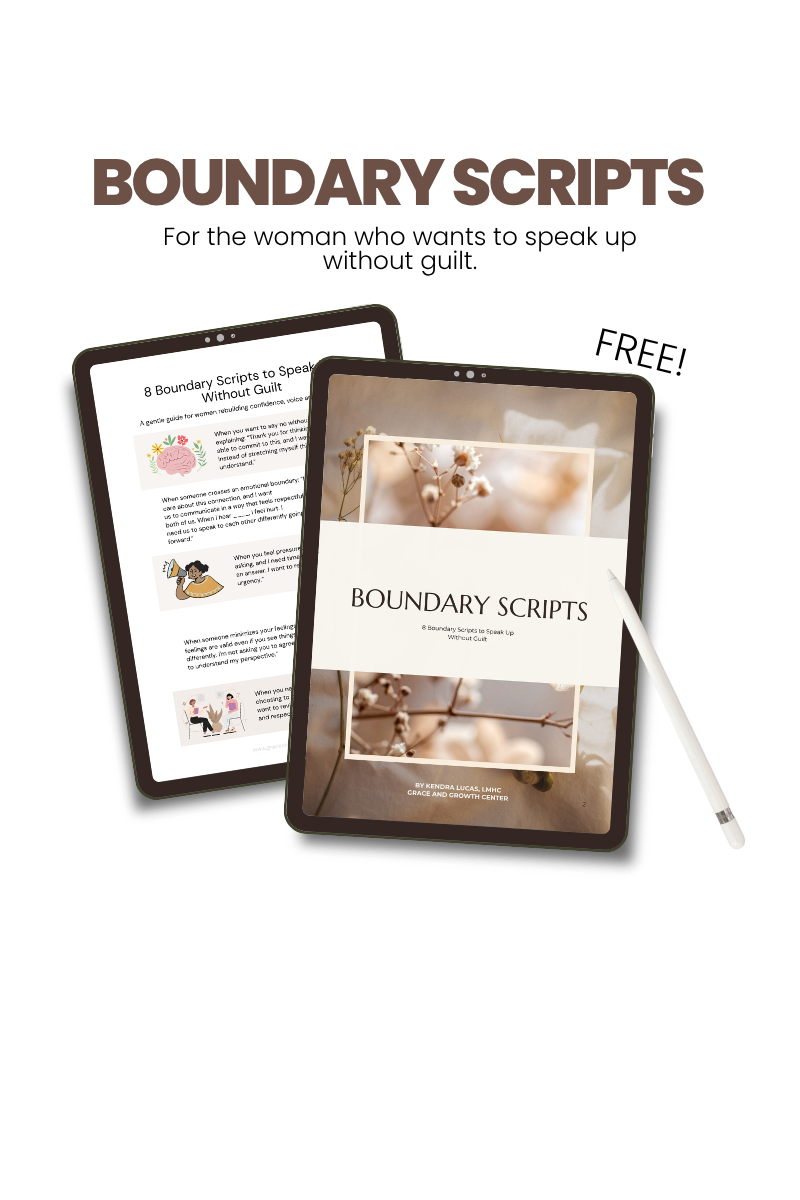
If putting the actual words together feels like the hardest part, our free Boundary Scripts guide walks through exactly what to say in the moments you'd normally go quiet.
Ready for the next step?
If setting boundaries feels uncomfortable or you never know what to say in the moment, download these 8 free boundary scripts to help you communicate your needs with confidence.
What Rounding Down Actually Costs You
It's easy to think of this as a small, harmless habit. A little white lie to keep the peace. But it adds up in ways that are easy to miss:
You stop trusting your own read on what you need, because you've overridden it so many times.
The people around you get a version of you that's easier to manage but harder to actually know.
Resentment builds quietly in places you never spoke up, even if no one else can see it.
You start to feel unseen in relationships where, technically, nothing "wrong" ever happened, because you never gave anyone the chance to see the real ask.
None of this happens all at once. It happens one swallowed sentence at a time, until "easy to love" quietly starts meaning "easy to overlook."
If this pattern feels tangled up with a fear of checking out on someone, or checking your phone one too many times, you might recognize some of it in this post on anxious attachment too. And if you want tools built specifically for calming that hypervigilance, the Anxious Attachment Healing Starter Pack is a good place to start.
The People Worth Keeping Can Handle You at Full Size
The people worth keeping in your life, friends, partners, even the nail tech you'll see again in three weeks, will not need you to be smaller. Most of them would rather know what you actually think and want. The ones who wouldn't were never going to make room for the whole of you anyway, whether you spoke up or not.
This is the part that tends to surprise people in this work: voicing a need doesn't usually cost you the relationship. It reveals which relationships were built to hold you in the first place.
Where to Go From Here
You don't owe anyone a smaller version of your needs.
If this resonated, it might help to understand which relationship pattern you tend to default into when your voice goes quiet, whether it's overfunctioning to keep the peace, staying guarded to avoid the risk altogether, or something else entirely. Take the quiz here to find out, and get a guide built around your specific pattern.
And if you're noticing this is bigger than one nail salon moment, if this is a pattern that's shown up across years, not just one Tuesday, that's exactly the kind of thing therapy can help untangle. You don't have to figure it out by yourself.
A question to take with you this week: Where have you been rounding yourself down lately, and what would it feel like to say the full-size version out loud? If you'd rather work through it on paper than just in your head, one of these therapist-recommended journals can be a good place to land the answer.
This post is part of an ongoing series on relationship patterns, attachment, and the quiet ways we learn to shrink. If you want reflections like this in your inbox every Monday, join the newsletter here.
KEEP READING
More for the high-achieving woman.


Ready to stop reading about it and actually change it?
Book a free 15-minute consultation — no pressure, no commitment.

Personal growth doesn't update everyone's expectations at once. Here's why change feels harder when the people around you haven't caught up.