

Why You Overthink Texts, And What It Really Means
This post contains affiliate links. I may earn a small commission at no cost to you. I only recommend products I'd genuinely suggest to a client.

You sent the message. Now you're rereading it for the fourth time.
Was it too much? Too eager? Did you come on too strong? Should you have waited longer to respond? Maybe you should have said it differently. Maybe you shouldn't have said it at all.
And now you're waiting. Watching the three dots appear and disappear. Calculating how long it's been since he read it. Crafting responses in your head for every possible thing he might say, or not say.
Sound familiar?
If you're a high-achieving woman who has everything together on paper. The career, the apartment, the goals, the work ethic, but still finds herself spiraling over a two-word text response.
I need you to hear me on this one: you are not crazy. You are not dramatic. Your nervous system is working exactly the way it was trained to.
Your Body Is Trying to Keep You Safe. That's the Whole Story.
Here's what's really happening when you obsessively analyze a message: your nervous system is doing its job. It's scanning for threat. It's trying to predict what comes next so you can protect yourself before it hurts.
That text isn't just a text. It represents something much bigger, the fear of being misunderstood, rejected, or deemed too much. And for high-achieving women especially, there's often a quiet terror underneath the overthinking that sounds like:
"If I can just figure out the right way to communicate, he won't leave."
Say that out loud to yourself. Hear how heavy that is for two people to be texting about weekend plans.
Why High-Achieving Women Struggle With This the Most
You're used to being in control. You solve problems for a living. You're strategic, perceptive, and you know how to read a room.
So when a relationship, or situationship, or talking stage, doesn't follow clear rules, your brain does what it was trained to do: analyze until you find the answer.
But love doesn't work on a rubric. And no amount of rereading that thread is going to give you the security you're actually looking for.
What's happening beneath the surface is often one of these:
Anxious attachment — You've learned, somewhere along the way, that love is inconsistent. So you stay hypervigilant, looking for signals that things are okay (or that they're not).
People-pleasing tendencies — You've been taught, consciously or not, that your value is tied to how others feel about you. So every response is a report card.
Fear of being "too much" — Maybe you were told at some point, directly or indirectly, that your emotions, your needs, your realness was overwhelming. And now you edit yourself in real-time, even in text form.
Is Your Anxiety Just... How You Function Now?
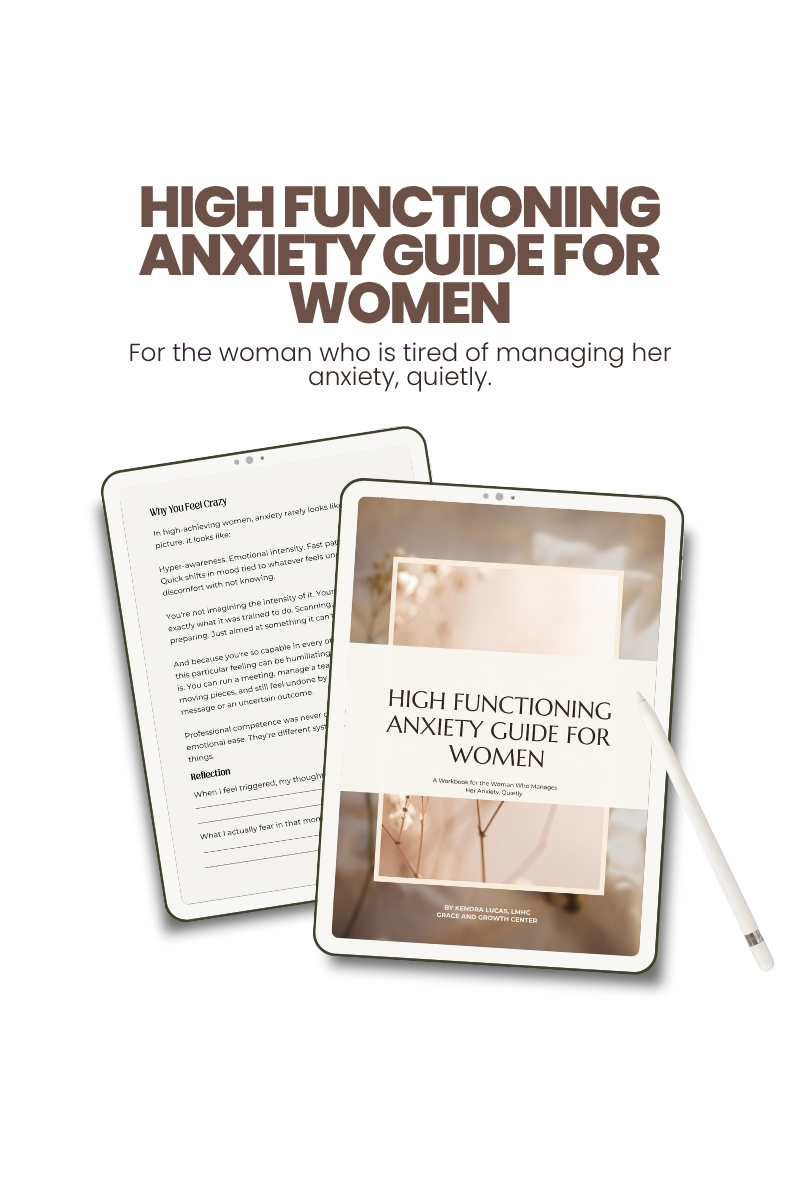
This free guide helps you recognize the difference between productive anxiety and the kind that's quietly running your life, so you can start responding to it instead of just managing it.
What the Overthinking Is Protecting You From
This is the part most people skip over.
The obsessive analysis feels like a problem, but it's actually a solution, a coping mechanism that developed because, at some point, being caught off guard felt dangerous.
Maybe you grew up in a home where you had to read the room to know if it was safe. Maybe an ex was unpredictable. Maybe you learned early that expressing too much, too openly, led to rejection or ridicule.
So now? You pre-process everything. You draft, revise, re-read, second-guess because preparation feels like protection.
The problem is, it's not actually protecting you. It's exhausting you.
What Healing This Actually Looks Like
Healing from overthinking in relationships isn't about learning to care less. It's about building enough internal security that you don't need external validation to feel okay.
It looks like:
Recognizing when your nervous system is activated and being able to name it without acting on it
Learning to tolerate uncertainty without needing to immediately resolve it
Understanding your attachment patterns and where they came from
Developing a relationship with yourself that doesn't crumble when someone takes three hours to text back
This is the deep work. And it doesn't happen from reading another article about "texting rules" or asking your group chat what he really meant.
It happens in therapy. In reflection. In slowly, gently learning that you are not too much, you've just been in the wrong environments, responding to old pain.
You Are Allowed to Feel Secure in Love
You worked hard for everything you have. At some point, you started working that hard for love too. Earning it, managing it, performing so you wouldn't lose it.
But love isn't a project. Love was never supposed to be a job interview. And you don't have to perform your way into being chosen.
If you're tired of the spiral, tired of the second-guessing, the hyperanalysis, the invisible emotional labor of just dating someone, that's a sign. Not that you need to try harder. But that something underneath deserves some attention.
If something in this post stirred something in you, that's not an accident. The patterns we carry in love don't always have obvious names, but they do have names.
The quiz is a good place to start finding yours. It takes about two minutes, it's free, and it might give language to something you've been feeling for a while but couldn't quite articulate.
Journal Prompts for Women Who Overthink Every Text
What story am I telling myself about this message?
What facts do I actually have?
What am I assuming without evidence?
What am I afraid this silence means?
When have I felt this anxiety before?
Is this about the present or a past wound being activated?
What would I tell a friend in this situation?
What do I need right now? Reassurance or self-trust?
What is outside of my control here?
What is inside my control?
What am I trying to prevent by overthinking?
What would happen if I paused instead of analyzed?
What feeling am I avoiding?
What is the simplest explanation I’m resisting?
What would it look like to trust myself at this moment?
KEEP READING
More for the high-achieving woman.


Ready to stop reading about it and actually change it?
Book a free 15-minute consultation — no pressure, no commitment.

You know he's not good for you. Your friends see it. Your body feels it. So why can't you walk away? This post gets honest about the real reasons letting go feels impossible, even when you know better.