

How to Stop Missing Someone Who Wasn’t Good for You
This post contains affiliate links. I may earn a small commission at no cost to you. I only recommend products I'd genuinely suggest to a client.

You're smart. You've built a career, managed a full life, and figured out almost everything on your own. So why does this, missing someone you know wasn't right for you, feel like the one thing you can't think your way out of?
Because you can't. And that's not a personal failure. That's biology.
It's Not About Logic. It's About Attachment.
When you bond with someone,especially in a relationship full of emotional highs and lows, your nervous system gets deeply involved. Your brain releases dopamine, oxytocin, and stress hormones that create a powerful attachment loop. This is why unhealthy relationships can feel genuinely addictive. You're not missing the person as they actually were. You're missing the potential you saw in them, the hope you held onto, the version of them you believed was possible, and the way you felt in the good moments.
And if you've ever experienced anxious attachment or emotional inconsistency in a relationship, that bond can feel even stronger, more magnetic, more confusing, and harder to walk away from even after it's over.
If your mind won't stop replaying everything, this post gets into why that happens and what actually helps
You're Not Missing Them. You're Missing the Attachment.
This distinction is important, and it might be the most honest thing you need to hear right now: you may not actually miss who they truly were. What you miss is the comfort of having someone. The routine. The texts. The feeling of being chosen. The fantasy of what it could have become.
Your brain doesn't easily separate the fantasy from reality, especially when the relationship ended with so much left unresolved. When it's over, particularly after emotional inconsistency, your nervous system goes into a kind of withdrawal. That's why breakup recovery can feel physical. The exhaustion, the tightness in your chest, the way your mind loops back to them uninvited. This isn't dramatic. It's neurological.
If the anxious attachment piece resonated, these are some of the resources I recommend for women starting to understand that pattern in themselves.
Stop Romanticizing the Highlight Reel
When you miss someone, your brain instinctively pulls up the good moments, the trips, the laughs, the times it felt like it was finally working. What it conveniently edits out is the anxiety, the confusion, the moments you felt small or unseen, the emotional unavailability you made excuses for.
Try this: write down five ways the relationship created anxiety in you, five needs that consistently went unmet, and five red flags you talked yourself out of. Not to be harsh or punish yourself for staying, but to help your brain tell the full story, not just the version that makes you miss them.
If you want to actually do this exercise rather than just think about it, here are the journals I recommend for exactly this kind of processing work.
Understand the Trauma Bond If It's There
If the relationship moved between emotional highs and then distance or withdrawal, you may have formed a trauma bond. This happens when affection and rejection alternate, and instead of weakening the attachment, it actually strengthens it. Understanding this doesn't mean something is broken in you. It means you're human, and your nervous system responded exactly the way nervous systems do. Recognizing the pattern is often what begins to dissolve the shame around it.
Carrying this kind of attachment takes a toll that goes beyond the relationship itself. Here's what that depletion can look like.
Create Distance, Including on Social Media
Every time you check their Instagram, reread old messages, or scroll back through photos, your brain reactivates the attachment. It never gets the chance to start detaching. Muting or unfollowing isn't petty, it's nervous system protection. Removing reminders from your immediate space isn't erasing what happened; it's creating the conditions you need to actually heal.
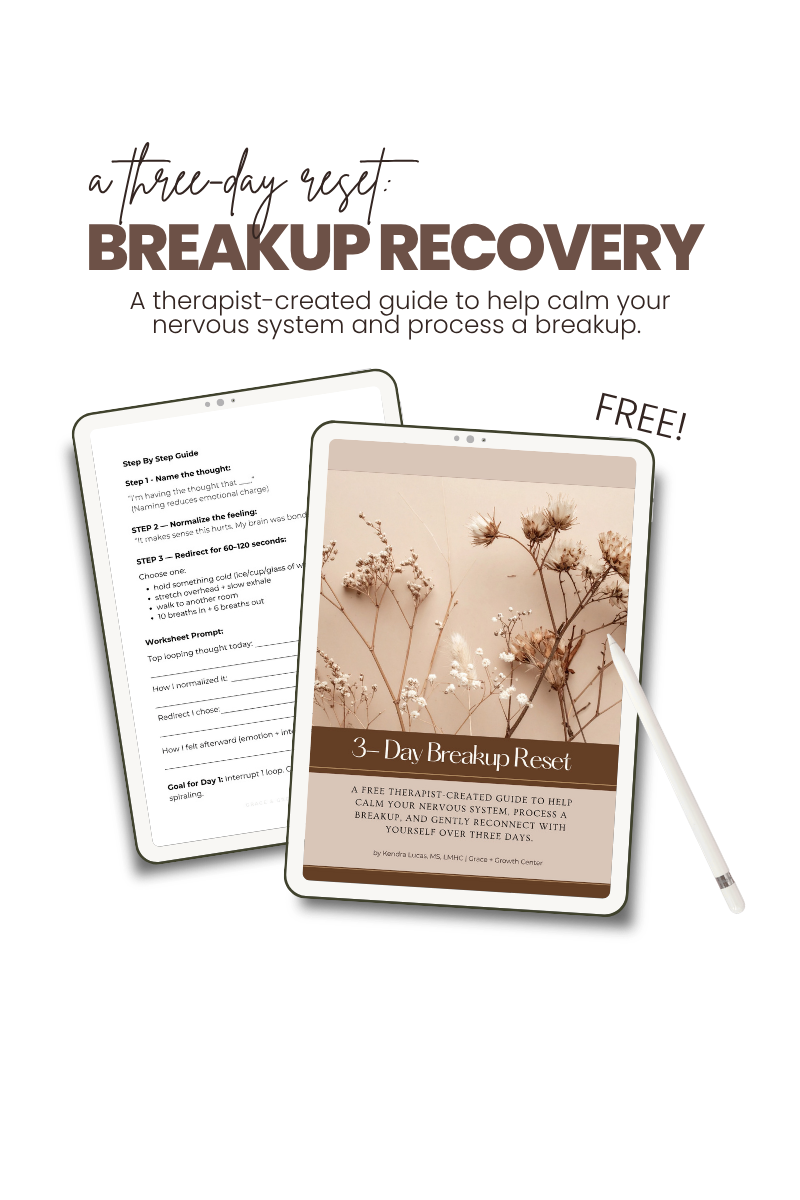
Trying to Heal From a Breakup That Still Doesn't Make Sense?
This free guide walks you through the questions you're still asking yourself, so you can start making sense of what happened and start feeling like you again.
Regulate When the Waves Hit
Missing someone doesn't arrive in a steady, manageable stream. It comes in waves, often at random, often at night, often right when you thought you were doing better.
Instead of trying to fight or suppress it, focus on regulating your body in the moment. 4-7-8 breathing, cold water on your wrists, a grounding technique like noticing five things you can see and four you can feel; these aren't magic, but they work. When your body calms down, the emotional intensity has room to decrease too.
These techniques work even better when your environment supports them. Here are some of the tools I recommend for creating that kind of space.
Rebuild Who You Are Outside of That Relationship
One of the reasons letting go feels so disorienting is because somewhere along the way, your identity got quietly tangled up in the relationship. Ask yourself honestly: Who were you before this person? What parts of you got smaller? Which friendships, interests, or dreams did you stop tending to?
Healing isn't just about detaching from them. Healing is about coming back to yourself. Expanding back into the woman you were before you started shrinking to make it work.
Part of coming back to yourself is creating a space that feels like yours again. Here's alist I put togetherfor exactly that season.
For a lot of high-achieving women, this rebuilding process also means getting honest about what they actually want — not just in relationships, but in life. This post goes deeper on that.
Give Yourself Permission to Grieve Something That Wasn't Healthy
Letting go means grieving the future you imagined. The version of them you hoped they'd grow into, the time and energy you invested, the love you gave that didn't come back the way you needed it to. Grief doesn't mean it was right for you. It means it mattered to you. And you're allowed to mourn something even when you know, deep down, it wasn't what you deserved.
Missing Them Doesn't Mean You Should Go Back
You can miss someone and still know they weren't aligned with you. Both things can be true at the same time, and holding that tension is part of the work. Healing starts to look like missing them a little less often, thinking about them without spiraling, and choosing yourself even when it's uncomfortable, especially when it's uncomfortable. That takes time, and it's not linear. But it's possible.
If you find yourself stuck in the loop, ruminating, anxious, repeating the same patterns, feeling emotionally frozen. That’s a sign your attachment wounds might need more than willpower to work through. Therapy can help you go beneath the surface and actually shift the patterns, not just manage them.
If you're in the thick of this right now, I put together a resource list specifically for breakup recovery, things that actually help during the hard days.
Journal Prompts for When You Miss Someone Who Wasn't Good for You
What exactly do I miss? This person, or how I felt at times with them?
What parts of this relationship required me to abandon myself?
When did I feel the most anxious in this connection?
What needs were consistently unmet?
What am I confusing with love right now?
What truth do I keep minimizing because it hurts?
What would I tell a friend missing this same person?
What did I tolerate that I would never want again?
What am I idealizing about them?
What am I afraid it says about me that I still miss them?
What version of me existed in that relationship?
What did I lose touch with while I was with them?
What would closure look like if I defined it myself?
What am I still emotionally attached to?
What am I ready to release?
KEEP READING
More for the high-achieving woman.


Ready to stop reading about it and actually change it?
Book a free 15-minute consultation — no pressure, no commitment.

Some endings never come with an explanation. Here's how to stop waiting for one and give yourself the closure you never got.