
When Success Doesn't Feel Fulfilling: What High-Achieving Women Are Really Missing
This post contains affiliate links. I may earn a small commission at no cost to you. I only recommend products I'd genuinely suggest to a client.

You did everything right. You worked hard, built the career, hit the milestones. Maybe you have the title, the salary, the apartment, the respect of your colleagues. From the outside, your life looks like a success story.
So why does it feel so hollow?
This is one of the most disorienting experiences a high-achieving woman can have, and one of the least talked about. Because if you've worked this hard and gotten this far and still don't feel fulfilled, what does that say about you?
Here's what it actually says: you're human. And you've likely been chasing someone else's definition of success for a very long time.
The achievement trap
High achievers are often raised, or shaped by experience, to equate accomplishment with worthiness. You learned early that being good, being impressive, being productive was how you earned love, safety, or approval. Achievement became your love language with the world.
The problem is that this never ends. There's always a next milestone, a higher bar, a new goal to reach. And every time you get there, the feeling of arrival lasts about 48 hours before the goalpost moves again.
This isn't a productivity problem. It's an identity problem. You've become so fused with what you do that you've lost touch with who you are outside of it. The pattern I'm describing here, needing to achieve to feel worthy, often shows up in relationships too. These are some of the resources I recommend for women starting to untangle that.
When achievement becomes the only metric that matters, burnout isn't far behind. Here's what that can look like for high-achieving women.
What it actually feels like
It doesn't always look like a breakdown. Sometimes it looks like sitting in your car after a meeting where everyone praised your work, and feeling absolutely nothing. Sometimes it's scrolling through your own life — the photos, the milestones, the evidence of everything you've built — and feeling like you're looking at someone else's story.
Sometimes it's the Sunday dread that shows up even when work is going well. The irritability that has no clean explanation. The sense that you're performing a version of yourself that everyone around you believes in, and wondering when they're going to figure out that you're not sure you believe in it anymore.
This is what fulfillment hunger looks like in a high-achieving woman. It's quiet, it's disorienting, and it's almost impossible to explain to people who haven't felt it, because from the outside, you have everything.
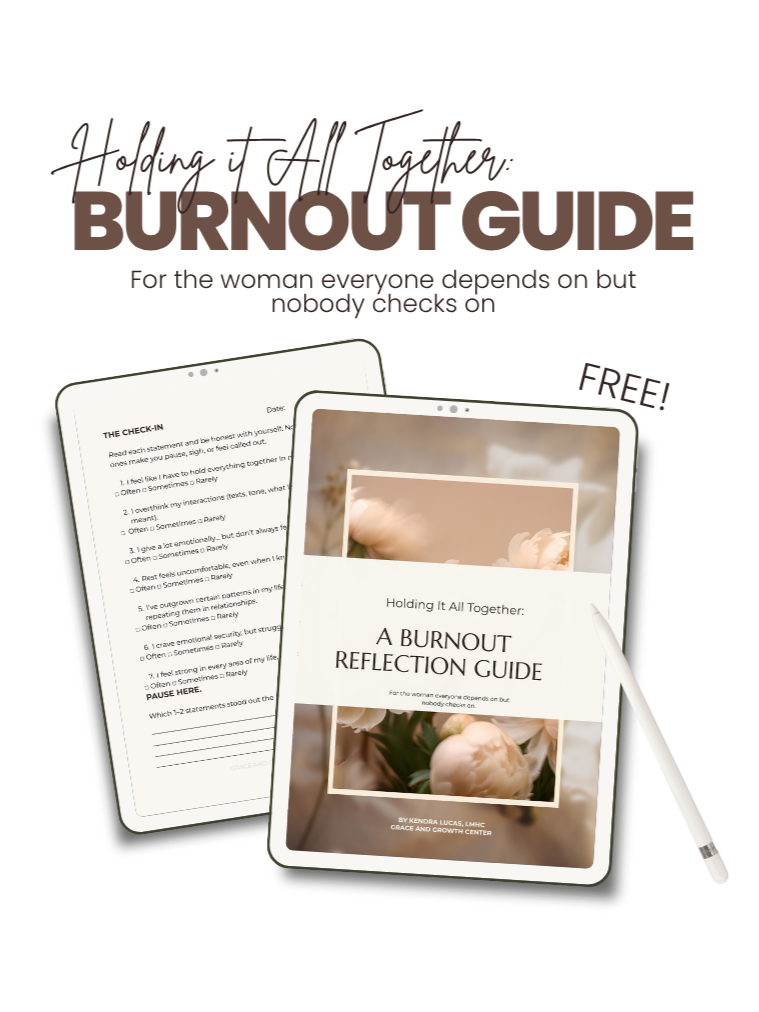
Feeling Like You're Holding Everything Together?
This free guide includes 5 powerful prompts to help you identify what's draining you, where you're carrying too much, and what needs your attention right now.
Success can mask a deeper emptiness
For some women, the relentless pursuit of achievement is actually a sophisticated way of avoiding something: grief, loneliness, a relationship that isn't working, an identity that doesn't quite fit. Staying busy means not having to sit with any of it.
Therapy often reveals that the emptiness people feel isn't a sign that success is meaningless. It's a signal that they've been disconnected from their own needs, values, and desires for a long time. The achievements are real. The life just wasn't built around what actually matters to them.
The relationship piece nobody talks about
For high-achieving women, the fulfillment gap often shows up most painfully in relationships. You can compartmentalize at work. You can perform competence and confidence in a meeting. But intimacy doesn't let you do that. It asks you to actually be present, to need someone, to be known in ways that have nothing to do with what you've accomplished.
A lot of the women I work with have built extraordinary professional lives and show up in their relationships running on empty, overfunctioning, over-giving, struggling to receive, and wondering why connection still feels so elusive when they're doing everything right there too.
The emptiness that started at work has a way of following you home. And often, working on one means eventually having to work on the other.
What fulfillment actually requires
Fulfillment isn't the absence of hard work. High-achieving women often assume that if they just slow down, they'll find peace, and then they slow down and feel worse, because stillness reveals everything they've been outrunning.
Real fulfillment comes from alignment: knowing what you actually value (not what you think you should value), making choices that reflect that, and having relationships and a sense of self that exist outside of your resume.
One of the most useful things you can do when you're in this season is start writing toward yourself again, not productivity journaling, not goal-setting. Just honest reflection. Here are the journals I recommend for exactly that.
That's not something you can achieve. It's something you have to feel your way into, often with support.
Why therapy helps when self-help doesn't
High-achieving women are usually excellent at self-improvement. They've read the books, done the courses, tried the routines. And for a while, each new strategy feels like it might be the thing that finally makes it click. But information alone can't reach the places where this actually lives.
The emptiness persists because it isn't an information problem. It's a relational and emotional one, rooted in old beliefs about worthiness, identity, and what you have to do to deserve rest, love, or a life that feels like yours.
Therapy provides something no book or course can: a real relationship in which you can start to understand yourself differently. Not as a problem to be optimized, but as a person worth knowing. You can explore where your drive actually comes from, what you're really afraid of underneath the ambition, and what a life built around your actual values, not the ones you inherited, might look like.
That work is slower than a productivity hack. It's also the only thing that actually lasts. That said, reading can still be part of the journey, especially when the books are actually asking the right questions. Here's the list I point women toward.
KEEP READING
More for the high-achieving woman.


Ready to stop reading about it and actually change it?
Book a free 15-minute consultation — no pressure, no commitment.

You got close to a goal you used to want and it felt like a stranger's life. Here's why outgrowing your own dream doesn't mean you failed it.