

Why Relationship Anxiety Makes You Overthink Everything
This post contains affiliate links. I may earn a small commission at no cost to you. I only recommend products I'd genuinely suggest to a client.
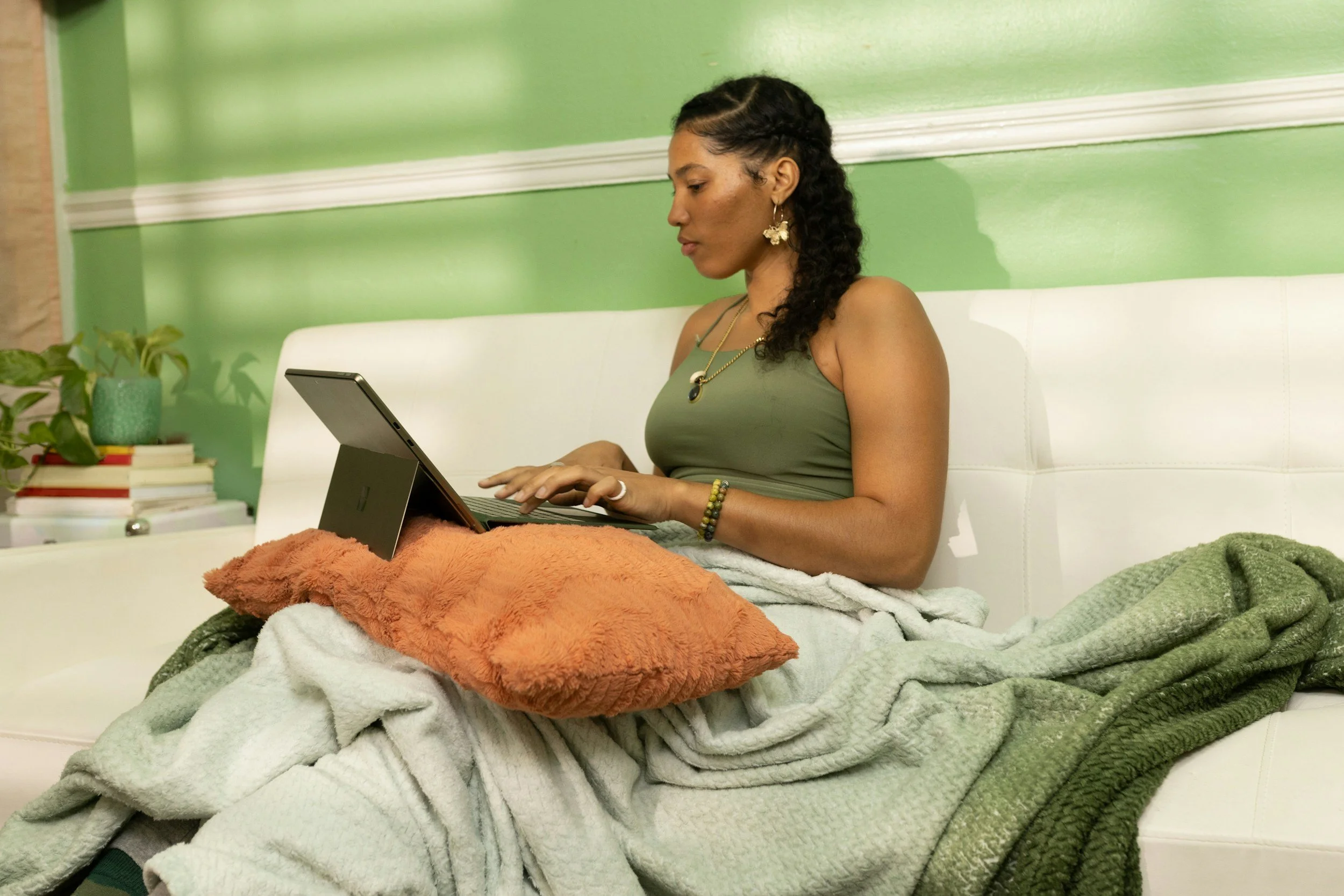
Do you find yourself replaying conversations with your partner long after they've ended? Maybe you read a text message three times trying to decode the tone, or you spend an entire evening convinced something is wrong — even though nothing has actually been said. You feel it in your chest before you can even name it: that low hum of unease that follows you into a relationship that, by most measures, should feel good.
This experience has a name. It's called relationship anxiety, and it's far more common than most people realize, especially among high-achieving women who are used to analyzing everything in their lives. The same mental sharpness that helps you excel at work or show up for the people you love can quietly become the thing that keeps you from ever fully relaxing in love.
What Relationship Anxiety Actually Looks Like
Relationship anxiety doesn't always look like panic or drama. More often, it looks like a mind that never fully powers down.
It's the habit of mentally reviewing what you said after a conversation ends, wondering if you came across wrong. It's the way a slow text response can shift your entire mood. It's seeking reassurance from your partner, not because anything is broken, but because the relief only lasts so long before the worry creeps back in. It's reading a neutral tone as distant, a short reply as a sign of something, a quiet moment as the beginning of something bad.
Even when the relationship is healthy and your partner is present and caring, your mind keeps searching. It's exhausting to live inside, and it can make even the most stable relationship feel uncertain.
Where It Comes From
Relationship anxiety rarely starts in your current relationship. Most of the time, it's rooted in earlier experiences, moments that taught you something about what love feels like and what you can expect from the people closest to you.
Maybe trust was broken in a past relationship, and your brain learned to stay alert so it wouldn't be caught off guard again. Maybe emotional needs went unmet for a long time, leaving you uncertain whether anyone would consistently show up. Maybe you learned early to be self-sufficient, to rely on yourself rather than others, and vulnerability still feels like risk rather than connection. Or maybe there's a quieter fear underneath it all: the fear of abandonment, of being too much, of one day being left.
These experiences don't stay in the past. They travel with you into new relationships, shaping the lens through which you read your partner's behavior, their silence, their words. Your nervous system is doing exactly what it learned to do, protect you. But what once kept you safe can now keep you stuck.
For tools that support your nervous system at home, this list is where I'd start.
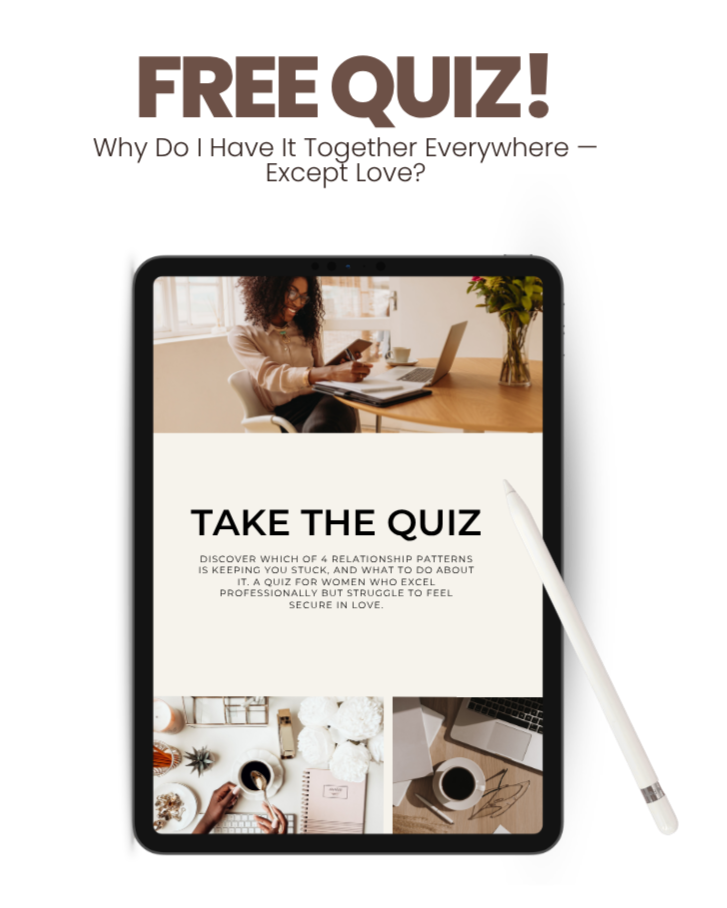
Why Do I Have It Together Everywhere — Except Love?
Discover which of 4 relationship patterns is keeping you stuck, and what to do about it. A quiz for women who excel professionally but struggle to feel secure in love.
How Overthinking Affects the Relationship
When relationship anxiety goes unaddressed, it doesn't just affect how you feel internally, it can slowly shape the dynamic between you and your partner.
The constant need for reassurance, the misreading of neutral moments as negative, the emotional tension that builds even when nothing is wrong, over time, these patterns can create distance that neither person intended. You might find yourself emotionally exhausted, feeling guilty for struggling in a relationship you actually want. Your partner may feel confused, unsure of how to help. Even when you both care deeply, the anxiety can make the relationship feel harder than it has to be.
That isn't a reflection of your worth, and it doesn't mean the relationship is doomed. It means there's something worth understanding and working through.
How Therapy Helps
Therapy creates a space to slow down and look honestly at the patterns that have been running quietly in the background, without judgment, and without the pressure to have it all figured out.
Together, we work to understand what's actually driving the overthinking, what emotional needs aren't being voiced, and where the anxiety is really coming from. We explore the stories your nervous system has been telling you, and begin to rewrite them. Over time, you develop tools to pause before reacting, to communicate your needs clearly and calmly, to trust yourself rather than endlessly seeking reassurance from outside sources.
Many of the women I work with describe the shift as feeling lighter, not because their circumstances changed overnight, but because they stopped carrying the weight of constant mental analysis. They begin to experience their relationships from a place of security rather than vigilance.
Ready to start the work? Here's what I'd put in your hands first.
Building Something More Stable
Learning to manage relationship anxiety isn't about shutting your feelings down or pretending you're fine when you're not. It's about developing a different relationship with your own inner experience, one where you can feel something without immediately acting on it, where you can sit with uncertainty without spiraling, where you can trust yourself to handle whatever comes.
That kind of internal stability doesn't happen all at once. It's built slowly, through honest self-reflection, consistent practice, and the support of a space that holds both your patterns and your potential.
If you're looking for a place to start, these are some of my favorite journals for self-reflection.
Relationship Anxiety Therapy in Houston
At Grace and Growth Center, I work with high-achieving women who are ready to stop letting anxiety run their relationships. Whether you're navigating a new relationship, working through patterns in a long-term partnership, or simply trying to understand why love has always felt harder than it should, this work is for you.
Virtual therapy sessions are available throughout Texas, so wherever you're located, support is accessible.
If you're ready to feel calmer and more secure in love, I'd love to connect. Schedule a free 15-minute consultation and let's talk about where you are and what's possible.
If you’re not ready to start therapy, (or you may not be a resident of Texas) you may enjoy this reading list I recommend the most.
Take the free Relationship Patterns Quiz
The quiz takes about three minutes and gives you a personalized breakdown of your relationship pattern and what's really driving it. It's a good place to start.
Recognizing the pattern is the first step. Not because awareness fixes everything, but because you can't choose differently until you can see clearly. And you deserve to choose differently.
Ready to stop reading about it and actually change it?
Book a free 15-minute consultation — no pressure, no commitment.
KEEP READING
More for the high-achieving woman.



High-achieving women are often the last to seek support, even when they're struggling. Here's why it happens and what getting help can actually look like.